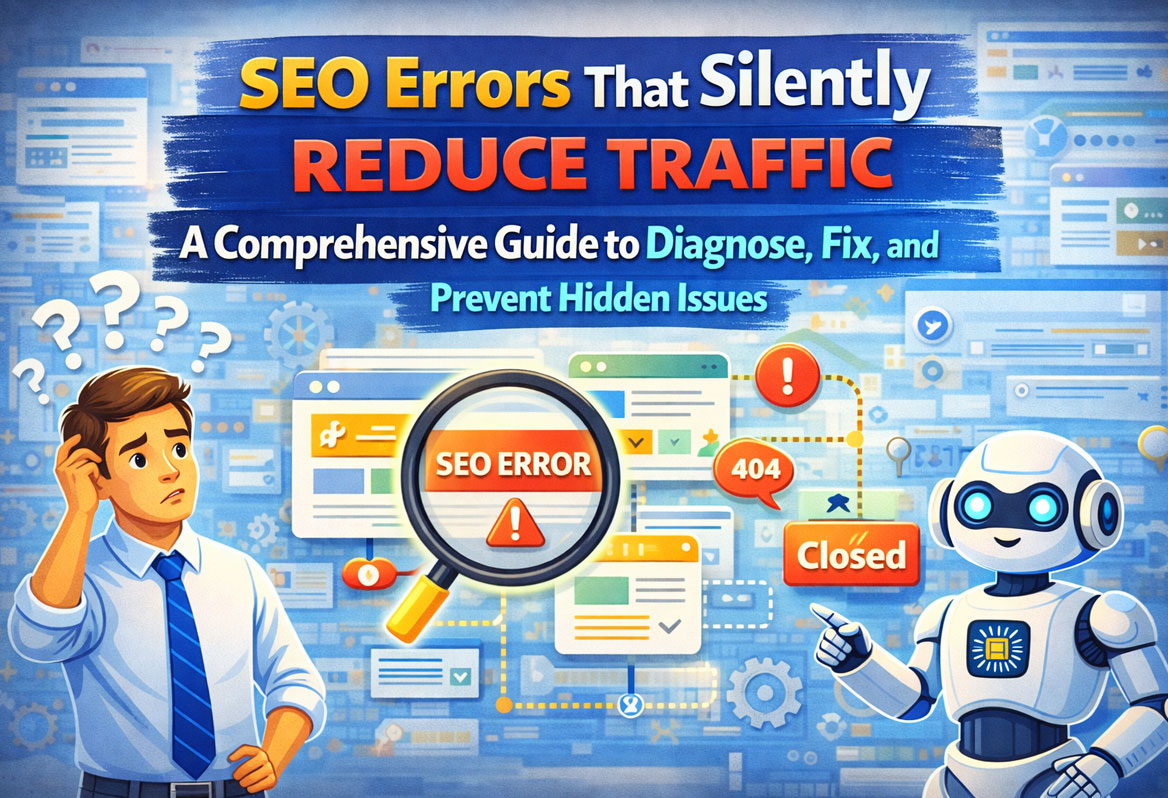
SEO Errors That Silently Reduce Traffic: A Comprehensive Guide to Diagnose, Fix, and Prevent Hidden Issues

SEO Errors That Silently Reduce Traffic

Key Takeaways

  • 🏗️
    SEO errors often accumulate over time, silently reducing traffic and rankings.
  • 🧭
    Common errors include slow page speed, poor internal linking, thin or outdated content, technical SEO issues, and lack of mobile optimization.
  • 🔗
    Use tools like Google Search Console, Screaming Frog, and Ahrefs to diagnose and fix these issues.
  • 🛠️
    Proactively audit and optimize your site to prevent future traffic loss.
  • 📈
    Regularly update and improve your content to maintain its relevance and value.

Your website traffic is dropping, but you can’t figure out why. You’re doing SEO, but something’s still wrong. The culprit? Silent SEO errors that slowly erode your rankings and visibility. These issues often fly under the radar, quietly diminishing your site’s performance month after month. By the time you notice the problem, significant damage may already be done.

This guide is designed to help you identify, diagnose, and fix these silent SEO killers. Whether you’re a beginner or an advanced SEO professional, you’ll find actionable insights, expert advice, and real-world examples to help you recover lost traffic and prevent future declines. We’ll cover everything from technical issues to content strategy missteps, providing a comprehensive roadmap to optimize your site.

Why Do SEO Errors Silently Reduce Traffic?

SEO errors often don’t cause immediate drops in traffic. Instead, they accumulate over time, gradually diminishing your site’s performance. According to a 2023 study by Ahrefs, 90.63% of pages get no organic traffic from Google, often due to overlooked SEO issues. These errors can be technical, on-page, or off-page, and their impact becomes more pronounced as competitors optimize their sites.

One common scenario is a website that appears to be performing well initially, but over time, small mistakes compound, leading to a gradual decline in rankings and traffic. For example, an eCommerce site might see a slow but steady drop in organic traffic because its product pages are not properly optimized for search engines. Another example is a blog that loses visibility because its internal linking structure is outdated, preventing Google from efficiently crawling and indexing its content.

Another factor is the ever-evolving nature of search engine algorithms. What worked well a year ago might not be as effective today. For instance, Google’s Core Web Vitals update in 2021 emphasized the importance of page speed and user experience. Websites that failed to adapt saw their rankings slip as competitors optimized their sites to meet the new standards.

Common SEO Errors That Silently Reduce Traffic

seoerrors

Slow Page Speed

Page speed is a critical ranking factor, yet many websites ignore it. According to Google’s Core Web Vitals update in 2021, pages that load within 2.5 seconds have the highest chance of ranking well. However, a 2023 report by Portent found that a 1-second delay in page load time can reduce conversions by 7%.

Common causes of slow page speed include unoptimized images (e.g., large file sizes), excessive use of JavaScript and CSS, and poor hosting infrastructure. For example, an online retailer might use high-resolution product images without compressing them, leading to slow load times and frustrated users.

To fix slow page speed, use tools like Google PageSpeed Insights or GTmetrix to diagnose issues. Compress images using tools like TinyPNG or Squoosh. Implement lazy loading for images and videos. Upgrade to a faster hosting provider or use a CDN (Content Delivery Network) like Cloudflare to improve load times globally.

Poor Internal Linking Structure

Internal linking is crucial for guiding users and search engines through your site, yet many websites neglect this aspect. A poor internal linking structure can lead to important pages being orphaned or buried, reducing their visibility and rankings.

For instance, a blog might publish a new article but fail to link it from other relevant posts, making it harder for Google to discover and index the new content. Similarly, an eCommerce site might have product pages that are only accessible through a search function, preventing them from receiving link equity from other pages.

To improve internal linking, conduct a thorough audit of your site’s structure. Use tools like Screaming Frog or Ahrefs to identify orphaned pages and ensure that important pages receive sufficient internal links. Create a logical hierarchy that guides users and search engines through your content.

Thin or Outdated Content

Content is king in SEO, but thin or outdated content can harm your rankings. Thin content refers to pages with little or no substantive value, such as auto-generated product descriptions or short blog posts with no depth. Outdated content, on the other hand, can include posts that are no longer relevant or accurate, leading to a loss of trust and authority.

For example, a blog specializing in digital marketing trends might publish an article on social media strategies that quickly becomes outdated as platforms evolve. Similarly, an eCommerce site might have product descriptions that are copied directly from the manufacturer without any unique value-added information.

To address thin or outdated content, conduct a content audit to identify underperforming pages. Update old posts with new information and insights. Ensure that all content provides value to the reader and is optimized for relevant keywords. Consider implementing a content refresh strategy to regularly update and improve your existing content.

Technical SEO Issues

Technical SEO encompasses a wide range of factors that affect how search engines crawl and index your site. Common technical SEO issues include broken links, duplicate content, and improper use of canonical tags. These issues can lead to a poor user experience and reduced rankings.

For example, a site with numerous broken links can frustrate users and lead to higher bounce rates. Similarly, duplicate content can confuse search engines and dilute the authority of your pages. Improper use of canonical tags can result in the wrong pages being indexed, reducing the visibility of your most important content.

To fix technical SEO issues, use tools like Screaming Frog or SEMrush to identify and address problems. Regularly audit your site for broken links and fix them promptly. Implement canonical tags correctly to avoid duplicate content issues. Ensure that your site’s XML sitemap is up-to-date and submitted to Google Search Console.

Lack of Mobile Optimization

With the majority of web traffic now coming from mobile devices, lack of mobile optimization is a critical SEO error. A site that doesn’t perform well on mobile devices will likely see a drop in rankings and traffic.

Common mobile optimization issues include unresponsive design, slow load times, and difficult navigation. For example, a site with a desktop-focused design might not display properly on mobile devices, leading to a poor user experience. Similarly, slow load times on mobile can drive users away before they even see your content.

To improve mobile optimization, ensure that your site uses a responsive design that adapts to different screen sizes. Test your site’s mobile performance using tools like Google’s Mobile-Friendly Test. Optimize images and other elements to reduce load times on mobile devices. Simplify navigation to make it easier for users to find what they’re looking for on smaller screens.

FAQ

Frequently Asked Questions

The most common unnoticed SEO errors include slow page speed, poor internal linking, thin or outdated content, technical SEO issues, and lack of mobile optimization. These issues often accumulate over time, leading to a gradual decline in traffic and rankings.

Use tools like Google Search Console, Screaming Frog, and Ahrefs to conduct a thorough SEO audit. These tools can help you identify issues such as slow page speed, broken links, duplicate content, and more.

To fix SEO errors, start by diagnosing the issues using the tools mentioned above. Address problems such as slow page speed, poor internal linking, and thin content. Regularly audit and optimize your site to maintain its performance.

Yes, specific technical SEO issues that can harm rankings include broken links, duplicate content, improper use of canonical tags, and crawl errors. These issues can lead to a poor user experience and reduced visibility in search results.

It’s recommended to conduct an SEO audit at least once every six months. However, if you notice a decline in traffic or rankings, conduct an audit immediately to identify and address any issues.

Thin content can harm your SEO by reducing the overall quality and authority of your site. Pages with little or no substantive value can lead to lower rankings and reduced traffic. Regularly update and improve your content to maintain its relevance and value.

To improve mobile optimization, ensure your site uses a responsive design that adapts to different screen sizes. Test your site’s mobile performance using tools like Google’s Mobile-Friendly Test. Optimize images and other elements to reduce load times on mobile devices.

Is Your Website Losing Traffic Due to Silent SEO Errors?

If your website is experiencing a decline in traffic and you suspect silent SEO errors are to blame, it’s time to take action. Sky Storm Digital offers comprehensive SEO services to help you diagnose, fix, and prevent these issues. Our team of experts conducts in-depth site audits to uncover the root causes of traffic loss and implements proven strategies to recover rankings. Don’t let hidden SEO errors erode your online presence—take the first step toward a healthier, more optimized website today.

👉 Get Your SEO Audit Today

Picture of Pooja Garg

Pooja Garg

Pooja Garg is the founder of Sky Storm Digital, a creative digital marketing agency dedicated to helping brands grow through strategy, storytelling, and design. With a passion for blending creativity and data-driven insight, Pooja writes about digital marketing trends, brand building, and the ever-evolving online landscape.

When she’s not crafting campaigns, she’s exploring new ways to connect creativity with technology.

Tags
What do you think?
Leave a Reply

Your email address will not be published. Required fields are marked *

What to read next