
On 6 October 2026 the National Medical Commission published new advertising guidelines, and they took effect the same day. No grace period. The notice (No. R-13014/01/2024-Ethics) counts search-engine, social media, influencer and AI-generated promotion as advertising. A hospital website, a clinic’s Google Business Profile and a doctor’s Instagram reel all sit inside its scope now, so the usual healthcare SEO audit checklist needs a compliance layer bolted on top before anyone touches title tags or backlinks. This one has both: a clause-by-clause NMC check first, then the SEO audit, then a way to fix pages without throwing away their rankings.
Key takeaways
- Effective date: The guidelines apply from 6 October 2026.
- Advertising claims: "Best", "No.1", "top" and "leading" are out of titles and headings unless you can back them with an independent, disclosed methodology (clause 8.1(ix)).
- Patient stories: Testimonials, before-and-after photos and patient success stories can't be used for promotion, and patient consent doesn't change that (clauses 6.2 and 8.1(v)).
- Doctor identification: Doctors' electronic posts need their name, qualifications, registration status and SMR/NMR number.
- Agency fees: Agency fees can't be tied to individual patient referrals, so pay-per-lead healthcare contracts need rewriting (clause 8.1(viii)).
What did the NMC guidelines change on 6 October 2026?
They widened what counts as advertising. The Guidelines on Ethical Advertising and Public Communication (National Medical Commission) define it in clause 3.2 as any communication that “directly or indirectly solicits, promotes or is intended to promote” a doctor’s or hospital’s services, and they go on to name “digital, social-media, sponsored, targeted, influencer-led, search-engine, platform-based, audio-visual, AI-generated or AI-assisted” communication explicitly, as long as it has a promotional character.
Clause 3.5 then lists the media covered, and “websites and blogs” sit right there next to WhatsApp, podcasts and sponsored posts. Pure information is exempt. Explanation I to clause 3.2 carves out information shared with the public “without same being promotional and without any intent for commercial benefit”, and that gap is where most good healthcare content will have to live from now on.
Two more clauses affect agencies directly. Clause 4.4 says publishing through “a digital platform, third party, advertising agency, influencer or other intermediary” doesn’t absolve the doctor or institution of responsibility for content it authorised or knowingly permitted. And clause 4.3 says hospitals read the guidelines together with the Clinical Establishments Act or the relevant state law, with that law prevailing if the two clash.
| Who | Main clauses | Enforced by |
|---|---|---|
| Individual registered doctors (RMPs) | 3.2, 6, 7, 8.1, 8.2, 9.2, 9.3 | State Medical Council, appeal to NMC's EMRB |
| Hospitals and clinical establishments | 3.2, 6, 7, 8.3, 9.1 | Clinical Establishments Act or state law |
| Healthcare platforms listing doctors | 9.4 | Not specified in the guidelines |
Is SEO still allowed for hospitals and doctors?
For hospitals, yes, within limits. Clause 8.3(i) lets hospitals and medical institutions publish “factual, objective and verifiable information” about their name, location, departments, facilities, equipment, emergency services, accreditation and charges, and clause 9.1 says a website directory of doctors with names, qualifications, specialties, registration details and availability is “materially distinct from a paid or promotional advertisement”. That’s a solid base for SEO. Departments, doctor directories, location pages and transparent fee pages are all things search engines reward anyway.
Individual doctors face a tighter rule. Clause 8.1(ii) says a registered medical practitioner shall not “solicit patients directly or indirectly, promote his/her professional services through self-promotion, engage any third party for marketing medical services”. That reads as a serious restriction on a solo practice hiring an agency to promote it. We’d advise any individual practitioner to get a view from their State Medical Council or a lawyer before running promotional SEO or ads in their own name. Health education is still open to them. Clause 5.1 allows awareness programmes and educational content, provided it doesn’t promote a personal practice, solicit patients or get “monetized through promotional marketing”.
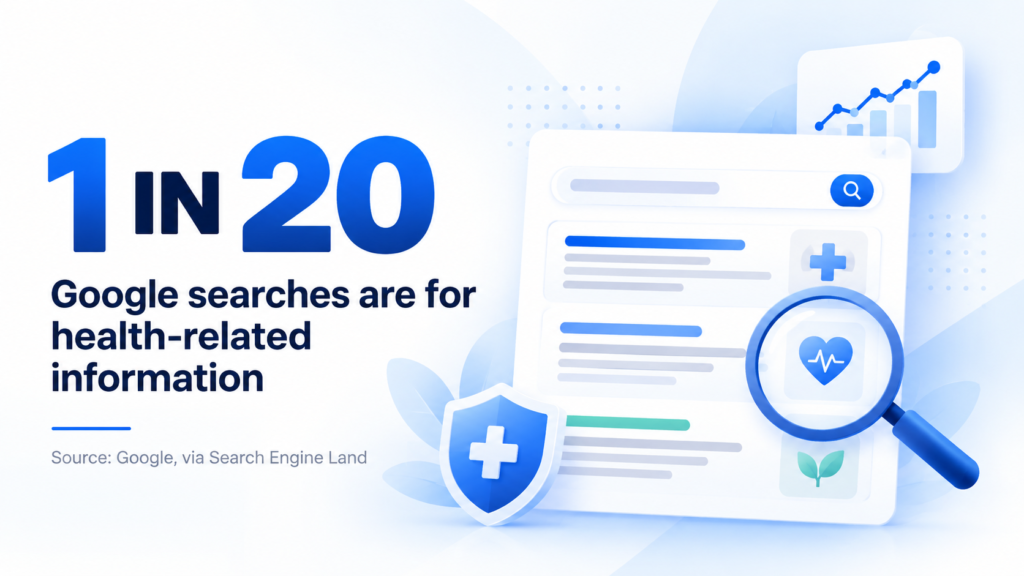
Search demand isn’t going anywhere, either. Google has said that one in 20 Google searches are for health-related information (Google, via Search Engine Land), and people will keep typing symptoms and “cardiologist near me” regardless of what any regulator says about advertising.
Part 1: The NMC compliance audit
Run this before any SEO work. Crawl the site with Screaming Frog or Sitebulb, export every title, H1, meta description and page body, then search the export for the phrases below; a spreadsheet filter on “best”, “No.1”, “100%”, “guarantee”, “painless” and “before” will surface most problems on a 300-page hospital site in under an hour.
| Check | What to look for | NMC clause |
|---|---|---|
| Superiority claims | "Best", "No.1", "top", "leading", "most trusted" in titles, H1s, meta, alt text | 8.1(iii), 8.1(ix) |
| Outcome claims | "Guaranteed cure", "100% success", "painless", "miracle" | 8.1(iii), 8.1(vi) |
| Testimonials and reviews | Testimonial pages, review widgets, video stories, review request campaigns | 3.2 Expl. V, 8.1(ii), 8.1(xi) |
| Before-and-after content | Galleries, case pages, celebrity patients | 6.2, 8.1(v) |
| Doctor disclosure | Name, qualifications, registration status, SMR/NMR number on posts and profiles | 3.2 Expl. III and IV, 9.1 |
| Offers and inducements | Discounts, cashback, free consultations, limited-period packages | 8.1(x) |
| AI-generated content | AI promotional campaigns, missing AI source mark, synthetic patients | 7.2 |
| Fake engagement | Bought reviews, followers, views, ranking manipulation | 8.1(xii) |
| Patient data | Identifiable names, faces, records in any public content | 6.1 to 6.4, 7.4, 7.6 |
| Agency contracts | Fees tied to leads, appointments or referred patients | 8.1(vii), 8.1(viii) |
1. Superlatives in titles, headings and meta descriptions
This one hurts SEO the most. Clause 8.1(ix) bars “best”, “No.1”, “leading”, “most trusted”, “top”, “number one” and “unmatched” unless the claim is “objectively verifiable, based on a transparent and independently ascertainable methodology”, and any award you cite has to disclose the awarding organisation, methodology and date. Most “Best Orthopaedic Hospital in Jaipur” title tags fail that test.
Rankings can survive this. You can still target “best orthopaedic hospital in Jaipur” queries. Google understands that a page titled “Orthopaedic Department, Jaipur: Surgeons, OPD Timings and Fees” answers the same need, and the factual version usually earns a better click-through rate from people who are comparing hospitals anyway (our view, not a measured figure).
2. Testimonials, review widgets and review campaigns
Explanation V is blunt. No doctor or hospital may “solicit, purchase, procure, manipulate or cause to be published fake, paid or misleading” reviews or testimonials, and a doctor “shall not request or share patient testimonials, recommendations, endorsements or reviews for professional promotion on social media”. Clause 6.2 adds that patient consent does not, by itself, make a prohibited testimonial acceptable.
Take down testimonial pages and embedded Google review carousels on doctor-led sites. Hospitals are a greyer case. The text says less about unsolicited reviews left on Google itself, so we’d stop incentivised or scripted review requests completely and get legal advice before running any review-generation programme at all.
3. Before-and-after galleries and case pages
Clause 8.1(v) prohibits publishing cases for promotion, advertising surgical results, displaying “before and after” photographs and publicising celebrity patients, except where published “strictly for scientific or educational purposes with anonymized patient consent”. Dental, dermatology, IVF and cosmetic surgery sites carry most of this content. Delete the galleries. If a case has real educational value, rewrite it as an anonymised clinical explainer with no call to book.
4. Doctor profiles and registration numbers
Here the rules help SEO. Explanation III to clause 3.2 says a doctor’s electronic media posts should disclose “their name, qualifications, registration status and SMR/NMR Registration number”, Explanation IV asks clinical establishments to do the same for doctors named in their posts, and Google’s own guidance says it gives “even more weight to content that aligns with strong E-E-A-T” on health topics. So add the registration number to every doctor profile, author box and medically reviewed blog post.
Photos need care. Clause 9.2 says an RMP’s photograph “shall not be permitted” where its use “constitutes self-advertisement, solicitation or promotional publicity”. A plain headshot in a factual directory looks far safer than a doctor’s smiling face across a homepage banner that reads like a hoarding, and we’d move any such banner off the site this month.
5. Packages, offers and AI content
Clause 8.1(x) bans discounts, limited-period offers, contests, coupons, cashbacks, referral benefits and free procedures where they encourage unnecessary consultations or amount to solicitation. Charges themselves are fine. The same clause says lawful disclosure of “charges, packages or fees shall be factual, transparent and not misleading”, so a health check-up page listing tests and price passes, while a “Diwali 40% off full-body checkup” banner almost certainly doesn’t.
AI gets its own clause. Clause 7.2 prohibits AI-generated promotional campaigns “for furtherance of commercial interest”, and any AI-generated promotional content that is otherwise allowed must carry a source mark saying it came from AI. If your content team drafts hospital pages with AI tools, label anything promotional and get a doctor to review the clinical claims (clau
Part 2: The healthcare SEO audit
Then comes the familiar part. Healthcare content counts as “Your Money or Your Life” in Google’s terms, and Google’s guidance says such content “must be highly accurate and consistent with established expert consensus”, so the bar for accuracy and authorship was high long before NMC raised it.
| Area | Check | Compliance note |
|---|---|---|
| Crawl and indexing | Department and doctor pages indexed, no orphan pages, clean redirects | None |
| Doctor directory | One page per doctor with qualifications, specialty, registration, OPD timings | Matches clause 9.1 |
| Schema | Hospital or MedicalClinic, Physician, MedicalSpecialty, FAQPage | Keep markup factual |
| Google Business Profile | Real business name, correct category, hours, departments | No "best" in the name |
| Medical content | Doctor-reviewed articles with author box and review date | Educational only, per clause 5.1 |
| Location pages | Address, directions, departments, emergency number | No superiority wording |
| Fee pages | Consultation and package charges in plain tables | Factual, no offers |
| Google Ads | Healthcare policy, landing page claims, certifications | Search ads count as advertising |
Technical and local foundations
Start with indexing. Hospital sites often have hundreds of thin doctor pages, duplicate department URLs and old campaign landing pages still live from 2022, so crawl the site, check Search Console’s Pages report and fix the basics first; our technical SEO audit guide covers the full sequence. Then look at Google Business Profile. Hospital names stuffed with “best multispeciality” or “No.1” are a problem under clause 8.1(ix) and against Google’s own naming rules. Our local SEO team checks every location listing for this.
Content, authorship and Google Ads
Educational content is the safest growth channel left. Write condition guides and procedure explainers, have a named doctor review each one, and show their qualifications and registration number in the author box, since Google says it strongly encourages “adding accurate authorship information, such as bylines” and NMC asks for the registration disclosure anyway. Keep these pages informational. A booking button on every paragraph makes an education page look a lot like solicitation.
Paid search needs a second look. Clause 3.2 names “search-engine” promotion as advertising, so Google Ads copy and landing pages face the same superiority, offer and outcome rules as the website, on top of Google’s own healthcare policy (online pharmacies in India, for example, need LegitScript and Google certification). If you’d rather not run both checks yourself, our healthcare SEO services team can.
How do you fix a non-compliant page without losing rankings?
Rewrite it and keep the URL. A department page that ranks well but carries testimonials and a “best surgeons” headline keeps most of its search value if the URL stays the same and the content becomes factual, so strip the prohibited parts, add doctor credentials, timings and charges, then request reindexing in Search Console.
Pages that exist only for prohibited content are different. A standalone “Patient Success Stories” page or a before-and-after gallery should go, with a 301 redirect to the most relevant department page so the links pointing at it aren’t wasted. Then watch impressions for four weeks. Pages that lost “best” from the title tag may wobble for a while. Give them a few weeks before judging.
What happens if a page breaks the rules?
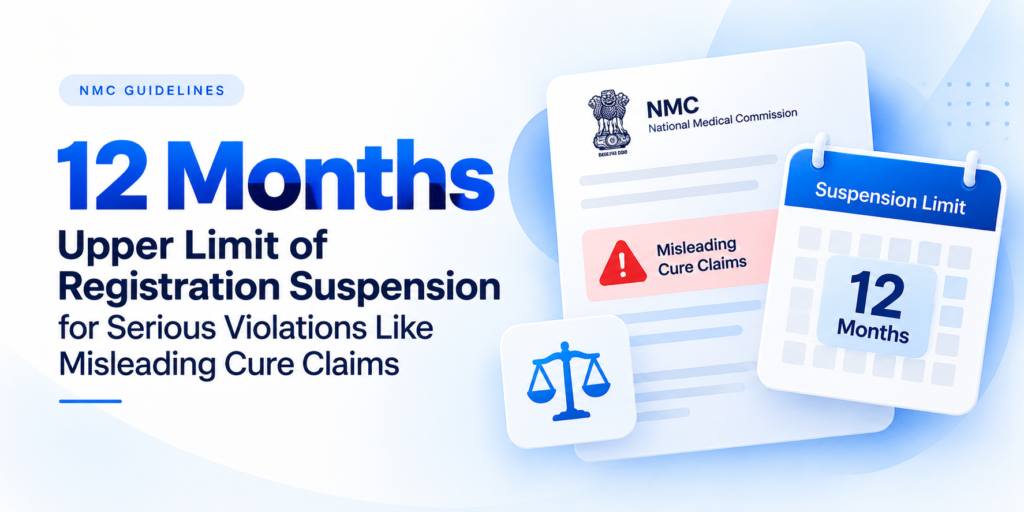
Penalties for doctors escalate fast. Clause 10.1 lets the State Medical Council take graded action: a warning and ethics training for a first violation, censure and a monetary penalty for a second, and suspension of registration for 6 to 12 months for serious violations such as misleading cure claims, inducements or “digital mass solicitation” (National Medical Commission). Repeat offenders can be removed from the register for 1 to 3 years.
There is a process. Clause 10.2 requires a show-cause notice before any penalty, and clause 11.1 gives the doctor 60 days to appeal to the NMC’s Ethics and Medical Registration Board. Hospitals are handled under the Clinical Establishments Act or state law (clause 11.5), though any doctor who personally authorised the content can still face their council separately.
Where to start this week
Crawl the site. Export titles, H1s, meta descriptions and body text, filter for the superlatives and outcome claims in Part 1, and list every testimonial page, gallery and offer banner you find, because those are the fixes that carry real regulatory risk. Then add registration numbers to every doctor profile and author box. If your marketing agency is paid per lead or per appointment, reopen that contract too, since clause 8.1(viii) puts that structure in question. Send us the crawl export with your domain if you’d like a second opinion on which pages to fix first.
Frequently asked questions
Hospitals can. Clinical establishments may keep doing SEO as long as the content stays factual and verifiable under clauses 8.3 and 9.1. Individual doctors face clause 8.1(ii). It bars self-promotion and engaging a third party to market medical services. Educational content in their own name is still allowed under clause 5.1, but we’d strongly suggest individual practitioners take advice from their State Medical Council or a lawyer before running any promotional campaign.
We wouldn’t. Explanation V to clause 3.2 bars fake, paid or misleading reviews, clause 8.1(xi) bars using patients or third parties for prohibited testimonials, and clause 6.2 says consent doesn’t make a prohibited testimonial acceptable. Embedding reviews as a promotional widget sits too close to those lines. Let reviews stay on Google itself, and don’t script or incentivise them.
Only if you can prove it independently. Clause 8.1(ix) allows superiority claims solely where they’re objectively verifiable through a transparent, independently ascertainable methodology, and any award you lean on has to name the organisation, method and date. Use factual titles instead.
Yes. Explanation III to clause 3.2 says doctors’ electronic media posts should show their name, qualifications, registration status and SMR/NMR registration number, and Explanation IV asks hospitals to disclose the same for doctors named in their posts. Put it in author boxes and profile pages too; it helps E-E-A-T as well.
Partly. Clause 7.2 prohibits AI-generated promotional campaigns for commercial interest and requires any permitted AI promotional content to carry an AI source mark, while educational drafts that a doctor has checked fall outside that campaign ban. It also bans AI-made patient images, testimonials or voices. Have a doctor review every clinical claim before publishing, whoever or whatever drafted it, and keep a record of who checked what.

Pooja Garg
Pooja Garg is the founder of Sky Storm Digital, a creative digital marketing agency dedicated to helping brands grow through strategy, storytelling, and design. With a passion for blending creativity and data-driven insight, Pooja writes about digital marketing trends, brand building, and the ever-evolving online landscape.
When she’s not crafting campaigns, she’s exploring new ways to connect creativity with technology.