Type “good dentist in Malviya Nagar” into ChatGPT and three or four clinic names come back before you’ve finished reading your own question. So where did it find them? Most people assume there’s a paid slot, or some directory OpenAI keeps behind the scenes. There isn’t. How ChatGPT recommends local businesses depends on a few sources it reads at the moment someone asks, and Google’s AI Overviews and AI Mode lean on a similar, though not identical, set. Below we go through those sources and what the research found, then the fixes an Indian business can make this month.
Key takeaways
- ChatGPT searches the web live. It partners with other search providers and rewrites your question into targeted searches.
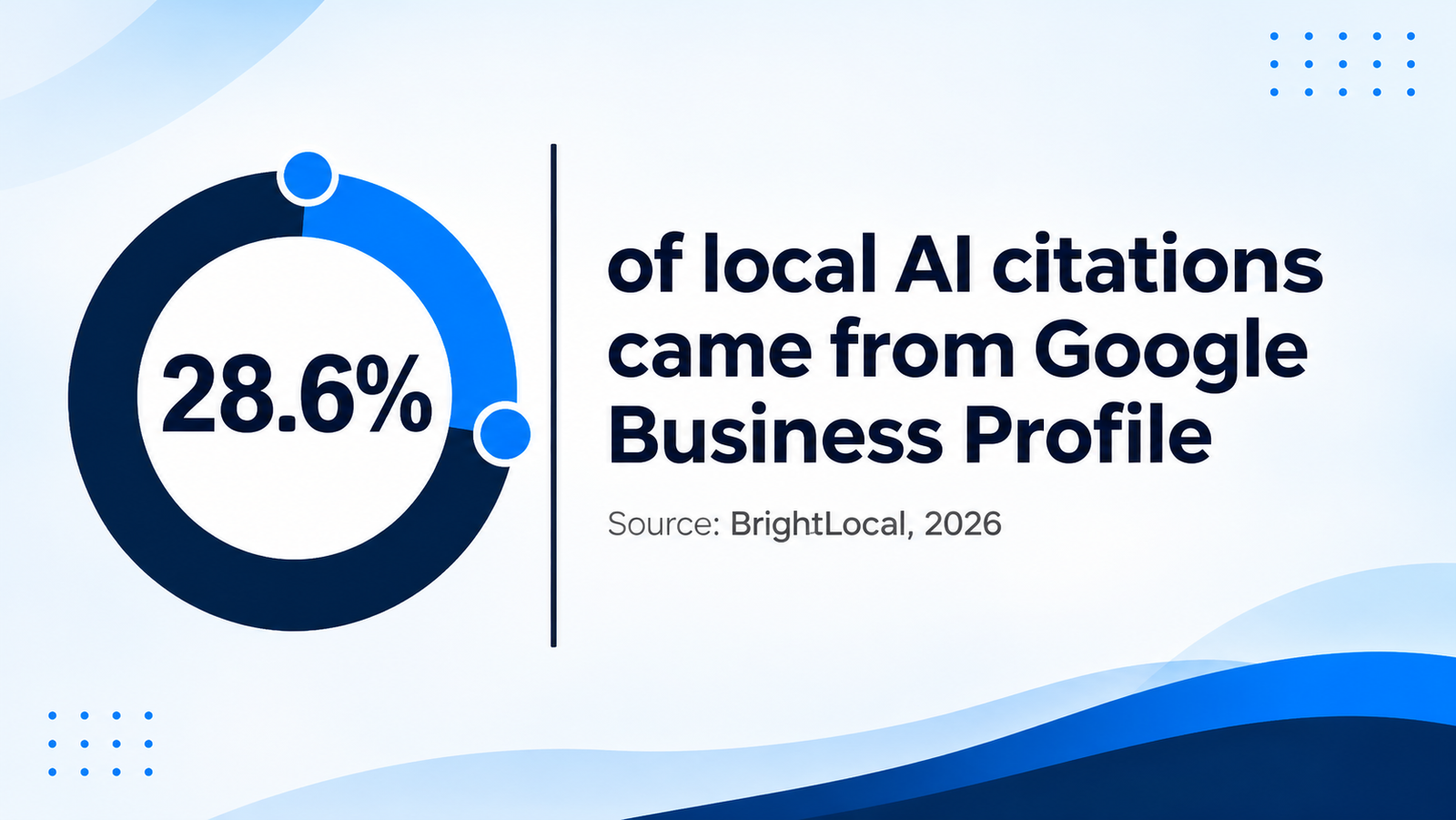
- Google Business Profile dominates Google's AI answers. It made up 28.63% of all local AI citations in BrightLocal's 2026 study.
- You control most of what gets cited. Websites and listings produced 86% of AI citations in Yext's research.
- India needs its own checks. The big studies covered the US, UK and Australia, not Indian directories.
How does ChatGPT find local businesses to recommend?
When a question needs current information, OpenAI says ChatGPT search rewrites it into one or more targeted queries, sends those to the search providers it partners with and writes its answer from whatever comes back. There’s no private list behind it.
Where you’re sitting changes the answer, too. ChatGPT may use an approximate location based on your IP address, and the OpenAI help page says it can share that with trusted third-party providers that supply local information, which is why the same question asked from Jaipur and from Pune can come back with completely different names. For restaurants, the page names OpenTable, Resy and Yelp. That’s all it names.
Then there’s the setting that quietly locks sites out. OpenAI says a site has to allow OAI-SearchBot to crawl it, and the host or CDN must let traffic from OpenAI’s published IP addresses through, so one over-eager Cloudflare bot rule can stop your own website from ever being a source. Worth checking today.
Which sources does ChatGPT cite for local searches?
BrightLocal’s August 2026 analysis, which looked at almost two million AI citations for 1,355 business locations, is the largest public study so far, and it found Yelp turned up as a source in 80% of all ChatGPT answers about local businesses, with TripAdvisor and OpenTable a long way behind. So: directories and review sites, mostly.
Eighty percent sounds decisive. Before anyone in India rushes to open a Yelp account, though, look at where the study was run: the US, the UK and Australia, markets where Yelp is a household name, and nobody has published the same breakdown for India.
What does that mean for an Indian business?
India is already ChatGPT’s second-largest audience; Sam Altman said in February 2026 that the country has 100 million weekly ChatGPT users, behind only the US. What’s missing is India-specific citation data, so the next paragraph is our reasoning, informed by how these tools behave elsewhere. Read it that way.
If ChatGPT leans on whichever directory dominates a market, Indian answers are more likely to pull from platforms that already hold Indian business data: Justdial and IndiaMART for general and B2B listings, Practo for clinics, Zomato for restaurants, and your Google Business Profile wherever it surfaces through search. Test before you bet. There’s a simple method further down, and keeping your details identical across all of them is sensible either way.
Where do Google AI Overviews and AI Mode get local business information?
Google Business Profile, mostly. In BrightLocal’s study it picked up 108,018 citations in AI Overviews and 455,123 in AI Mode, and across every platform tested it accounted for 28.63% of all local AI citations, more than any other single source.
Google’s own line? Nothing special required. Its guidance for site owners says there are no additional requirements or special optimizations needed for AI Overviews or AI Mode, and no special schema.org markup either; what it asks for instead is unglamorous, namely indexed pages that can show a snippet, structured data that matches the visible text, and Merchant Center and Business Profile information that’s kept current.
If your profile still shows last year’s hours, a number nobody picks up or a lone photo of the shop sign, that’s the business Google’s AI will describe to people, and it puts the profile ahead of everything else on this list. Our Google Business Profile playbook for Jaipur goes through every field, category and photo worth fixing. Most take minutes.
Put side by side, the two systems look like this.
| Question | ChatGPT | Google AI Overviews and AI Mode |
|---|---|---|
| Where it looks | Live web searches through partner providers | Google’s own search index |
| Top local source in BrightLocal’s study | Yelp, in 80% of answers | Google Business Profile |
| How it knows your area | Approximate location from your IP address | Your device or account location |
| What you control | Crawl access, listings, reviews, website copy | Business Profile, indexed pages, structured data |
Does your own website still matter?
It does. Yext analysed 6.8 million citations from ChatGPT, Gemini and Perplexity between July and August 2025 and found 86% came from sources brands already manage, with first-party websites at 44%, listings at 42% and reviews plus social adding another 8%.
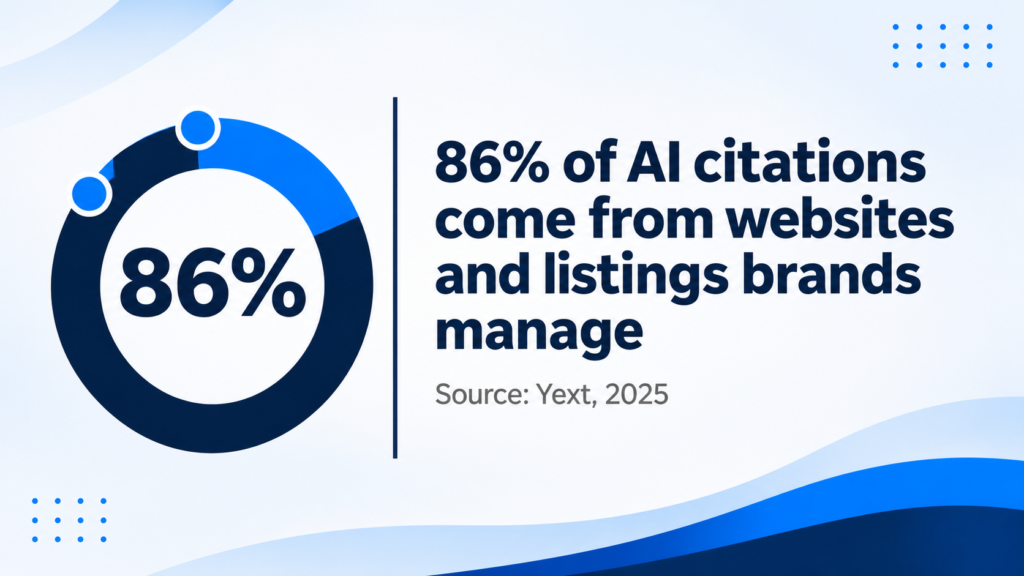
Flip that around for a second. Most of what AI tools quote about you is text you wrote, or could edit tomorrow, on your site and your listings, so a thin services page or a stale directory entry is a gap you made yourself. Other people’s mentions still count (we’ve argued that brand mentions now matter more than backlinks for many local businesses), just by a smaller share than most owners expect.
How do you get your business recommended by AI in India?
Begin with what’s already there. For most Indian businesses that means a complete Google Business Profile, matching details on the two or three directories that dominate your category, a website the crawlers can reach and pages that answer real questions in plain language, and the six steps below cover all of it.
- Complete your Google Business Profile. Primary and secondary categories, services with descriptions, opening hours including holidays, and fresh photos. Answer every review.
- Make your details identical everywhere. Name, address and phone should match character for character on Justdial, IndiaMART, Bing Places and any category platform like Practo or Zomato.
- Let the AI crawlers in. Check robots.txt and your CDN settings for OAI-SearchBot and Googlebot. One blocked bot can remove your website from AI answers entirely.
- Write service pages that answer questions. “Root canal cost in Jaipur” and “same-day AC repair in Vaishali Nagar” are the kinds of phrases people now type, and speak, into chat tools.
- Keep reviews coming. Ask every satisfied customer, every week. A steady flow is more convincing than a burst from 2023, to people and quite possibly to AI tools too.
- Add structured data that matches the page. LocalBusiness schema with the same address and hours shown on screen, since Google’s guidance asks for structured data that matches the visible text.
If that sounds a lot like local SEO, it largely is. Mostly, anyway. It’s the same groundwork behind local SEO in Jaipur aimed at a new kind of reader, and our guide to getting cited by ChatGPT and AI Mode goes deeper on the content and entity side if you want more.
How do you check whether AI recommends you?
Open ChatGPT logged out, or in a temporary chat, and type the questions your customers actually ask with the area included, such as “best physiotherapist near Mansarovar”, “CA for GST filing in Raja Park” or the Hinglish version someone might say into their phone. Note who gets named. Note which sources are linked, and whether your own details are right.
Then do it again next month, and the month after, because answers move as sources change and a plain sheet with the date, the prompt, the names that came up and the sources cited will show you within a quarter which fixes the AI tools have noticed. Same prompts, every time.
Run the same check in Google AI Mode.
Frequently asked questions
Get the sources right first. AI tools quote what they can read, so keep your product or service pages clear and crawlable and list them on the directories that dominate your category; in Yext’s research, 86% of AI citations came from websites and listings brands control. Nobody can buy a guaranteed mention, and OpenAI says as much.
You can’t switch one on, but you can be eligible for it. Google says there are no special requirements beyond normal SEO, which in practice means your page has to be indexed and allowed to show a snippet. For local searches the Business Profile carries most of the weight, as the top AI Overviews source in BrightLocal’s 2026 study. Start there.
Claim or create your Google Business Profile at google.com/business and verify it, usually by video, phone or postcard. It’s free. Then fill in everything (categories, services, hours, photos, description), paying special attention to services and holiday hours, because both are easy to leave blank and both show up in Maps and in AI answers too.
OpenAI doesn’t say. Its help page names partner search providers and a few booking sites but stops there, and in BrightLocal’s study Business Profiles dominated Google’s AI answers while ChatGPT favoured Yelp, TripAdvisor and OpenTable. Keep the profile complete anyway, since Google’s own AI answers lean on it so heavily.