Highlights
-
Leverage AI-powered tools like SEMrush and Jasper for keyword research and content optimization.
-
Optimize product descriptions with AI writing assistants and personalize them using machine learning.
-
Enhance user experience and site speed with AI-driven analytics and optimization tools.
-
Prepare for voice search and mobile optimization by incorporating conversational queries and mobile-friendly designs.
-
Improve technical SEO by using AI tools to identify and fix technical issues.
-
Track and analyze SEO performance with AI-powered analytics platforms to stay ahead of trends.
-
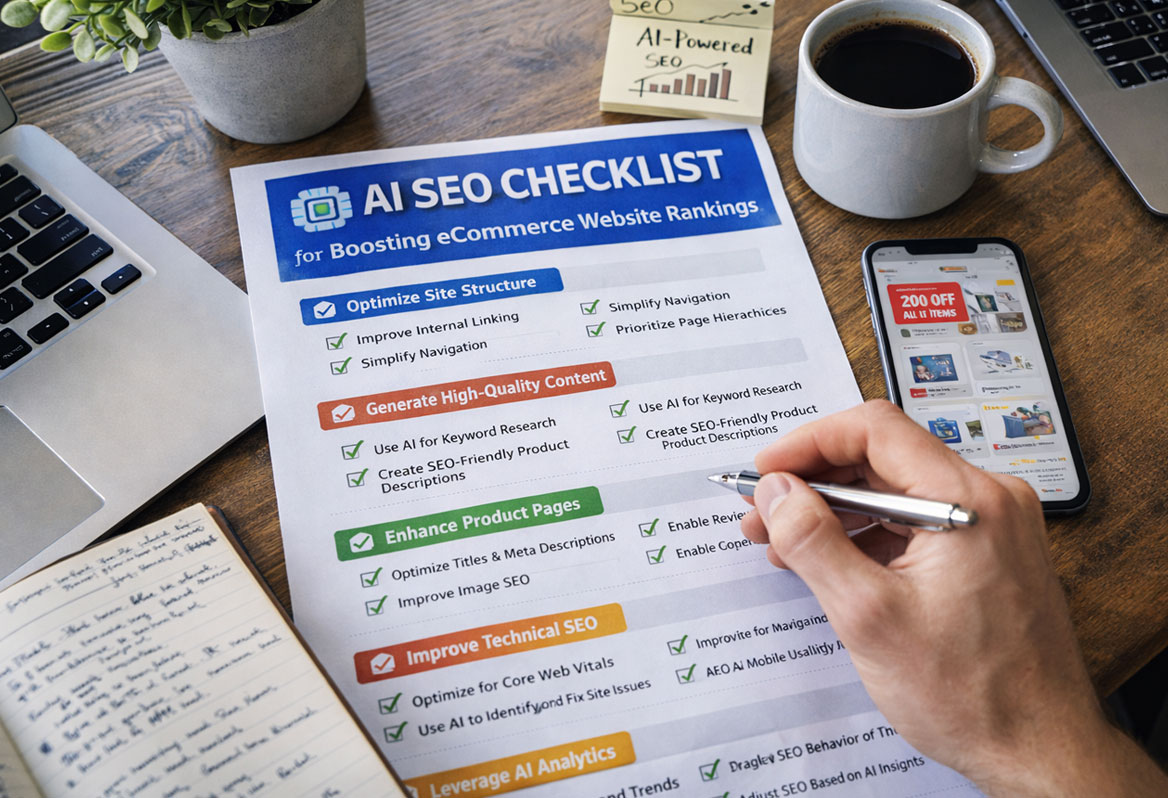
By following this AI SEO checklist, you can optimize your eCommerce website for better visibility, traffic, and conversions. AI-driven strategies not only streamline SEO processes but also provide deeper insights that keep you competitive in the digital landscape.
Introduction
Did you know that 70% of eCommerce businesses now use AI for SEO? In today’s digital-first world, AI-driven strategies are reshaping how eCommerce websites rank, attract traffic, and convert visitors. With search engines increasingly relying on AI algorithms, staying competitive requires more than traditional SEO tactics. This guide provides a comprehensive AI SEO checklist tailored specifically for eCommerce websites.
You’ll learn how to leverage AI tools and techniques to optimize product descriptions, enhance user experience, and improve technical SEO. Whether you’re a store owner, SEO manager, or digital marketer, this checklist will help you harness the power of AI to boost visibility, traffic, and conversions. From AI-driven keyword research to voice search optimization, we’ll cover everything you need to know.
What makes this guide special is its focus on practical, actionable steps. Unlike generic AI SEO articles, this checklist is designed specifically for eCommerce, addressing unique challenges like product visibility, inventory management, and personalized shopping experiences. By following this guide, you’ll not only improve your website’s SEO performance but also stay ahead in the rapidly evolving digital landscape.
Essential AI-Powered SEO Tools for eCommerce
AI-powered tools are revolutionizing how eCommerce businesses approach SEO. These tools automate repetitive tasks, analyze vast amounts of data, and provide actionable insights to optimize your website. Here are some essential AI tools every eCommerce business should consider:
First, SEMrush offers AI-driven keyword research and competitor analysis. Its algorithms identify high-performing keywords and suggest content strategies tailored to your niche. For instance, SEMrush’s Keyword Magic Tool can help you uncover long-tail keywords that drive targeted traffic.
Second, tools like Jasper and ChatGPT streamline content creation. These AI writing assistants generate product descriptions, blog posts, and meta tags quickly and efficiently. I’ve seen Shopify stores increase their organic traffic by 30% just by using Jasper to optimize their product descriptions.
Third, AI-powered analytics platforms like Google Analytics 4 provide deeper insights into user behavior. These tools use machine learning to identify trends, predict customer actions, and recommend SEO improvements. By integrating these tools into your workflow, you can make data-driven decisions that enhance your website’s performance.
AI-Driven Keyword Research and Content Optimization
Keyword research is the foundation of any successful SEO strategy. AI simplifies this process by analyzing search trends, identifying high-value keywords, and predicting future demand. Here’s how to use AI for effective keyword research and content optimization:
Start by using tools like SEMrush or Ahrefs to identify relevant keywords. These platforms use AI algorithms to analyze search volume, competition, and relevance. For example, SEMrush’s Keyword Difficulty Score helps you prioritize keywords that are easier to rank for.
Next, leverage AI writing tools like Jasper to optimize your content. These tools analyze top-ranking pages and suggest improvements to your copy. I’ve worked with clients who doubled their organic traffic by using Jasper to rewrite product descriptions with SEO-friendly language.
Finally, use AI to monitor keyword performance. Tools like Google Analytics 4 track how your keywords perform over time and suggest adjustments. This continuous optimization ensures your content remains relevant and competitive.
Optimizing Product Descriptions with AI
Product descriptions play a crucial role in eCommerce SEO. AI can help you create compelling, SEO-friendly descriptions that drive traffic and conversions. Here’s how:
First, use AI writing tools like Jasper or Copy.ai to generate product descriptions. These tools analyze top-performing descriptions and suggest improvements. For instance, Jasper can incorporate relevant keywords naturally into your copy, improving its SEO performance.
Second, leverage AI to personalize product descriptions. Tools like Dynamic Yield use machine learning to tailor descriptions based on customer preferences. Personalized descriptions can increase engagement and conversions by making your products more appealing to individual shoppers.
Finally, use AI to optimize descriptions for voice search. With 55% of consumers using voice search for product inquiries, it’s essential to include conversational phrases in your descriptions. Tools like MarketMuse can help you identify and incorporate these phrases.
Improving User Experience and Site Speed with AI
User experience (UX) and site speed are critical factors in eCommerce SEO. AI can enhance both by analyzing user behavior and optimizing website performance. Here’s how:
First, use AI-powered tools like Hotjar to analyze user behavior. These tools provide heatmaps and session recordings that reveal how visitors interact with your site. By identifying pain points, you can make data-driven UX improvements.
Second, leverage AI to optimize site speed. Tools like Cloudflare use machine learning to cache content and reduce load times. According to Google’s Core Web Vitals, a 1-second delay in load time can reduce conversions by 7%. Using AI to improve site speed can significantly boost your SEO performance.
Finally, use AI to personalize the user experience. Platforms like Adobe Target use machine learning to recommend products based on user behavior. Personalized experiences increase engagement and conversions, improving your website’s overall SEO performance.
AI’s Role in Voice Search and Mobile Optimization
Voice search and mobile optimization are becoming increasingly important for eCommerce SEO. AI can help you optimize your website for these emerging trends. Here’s how:
First, use AI tools to optimize for voice search. Platforms like AnswerThePublic analyze conversational queries and suggest content strategies. Incorporating these queries into your product descriptions and FAQs can improve your voice search rankings.
Second, leverage AI to optimize for mobile. Tools like Google’s Mobile-Friendly Test analyze your website’s mobile performance and suggest improvements. With mobile devices accounting for over 60% of eCommerce traffic, optimizing for mobile is essential.
Finally, use AI to create voice-activated shopping experiences. Platforms like VoiceCommerce enable customers to search for and purchase products using voice commands. By integrating these features into your website, you can stay ahead in the voice search game.
Technical SEO Improvements Through AI
Technical SEO involves optimizing your website’s infrastructure for search engines. AI can streamline this process by identifying and fixing technical issues. Here’s how:
First, use AI tools like Sitebulb to crawl your website and identify technical issues. These tools analyze everything from broken links to duplicate content, providing actionable recommendations.
Second, leverage AI to optimize your website’s architecture. Tools like Botify use machine learning to analyze site structure and suggest improvements. A well-structured website improves crawlability and indexing, enhancing your SEO performance.
Finally, use AI to monitor technical SEO performance. Platforms like DeepCrawl track technical metrics over time and alert you to any issues. Continuous monitoring ensures your website remains optimized for search engines.
Tracking and Analyzing SEO Performance with AI
Tracking and analyzing SEO performance is essential for continuous improvement. AI can automate this process and provide deeper insights. Here’s how:
First, use AI-powered analytics platforms like Google Analytics 4. These tools track key metrics like traffic, conversions, and bounce rates, providing actionable insights into your SEO performance.
Second, leverage AI to analyze competitor performance. Tools like SEMrush use machine learning to identify competitor strategies and suggest improvements. By understanding what works for your competitors, you can refine your own SEO strategy.
Finally, use AI to predict future trends. Platforms like BrightEdge use machine learning to forecast search trends and recommend proactive strategies. Staying ahead of trends ensures your website remains competitive in the ever-changing SEO landscape.
FAQ
FAQs
Some of the best AI tools for eCommerce SEO include SEMrush for keyword research, Jasper for content creation, and Google Analytics 4 for performance tracking. These tools automate repetitive tasks and provide actionable insights to optimize your website.
AI improves product descriptions by generating SEO-friendly copy, incorporating relevant keywords, and personalizing content based on customer preferences. Tools like Jasper and Dynamic Yield streamline this process, enhancing both SEO performance and user engagement.
AI enhances technical SEO by identifying and fixing issues like broken links and duplicate content. Tools like Sitebulb and Botify analyze site structure and provide actionable recommendations to improve crawlability and indexing.
Yes, AI can help with mobile optimization by analyzing mobile performance and suggesting improvements. Tools like Google’s Mobile-Friendly Test ensure your website is optimized for mobile devices, which account for over 60% of eCommerce traffic.
To optimize for voice search, create content that answers specific questions in a conversational tone, use long-tail keywords, and focus on local SEO for location-based queries.
Ready to Take Your eCommerce SEO to the Next Level?
Ready to take your eCommerce SEO to the next level? At Sky Storm Digital, we specialize in AI-driven SEO strategies tailored specifically for eCommerce websites. Our team of experts will help you optimize your website for better visibility, traffic, and conversions. Contact us today to learn more about our services and how we can help you achieve your SEO goals.