Key Takeaways
-
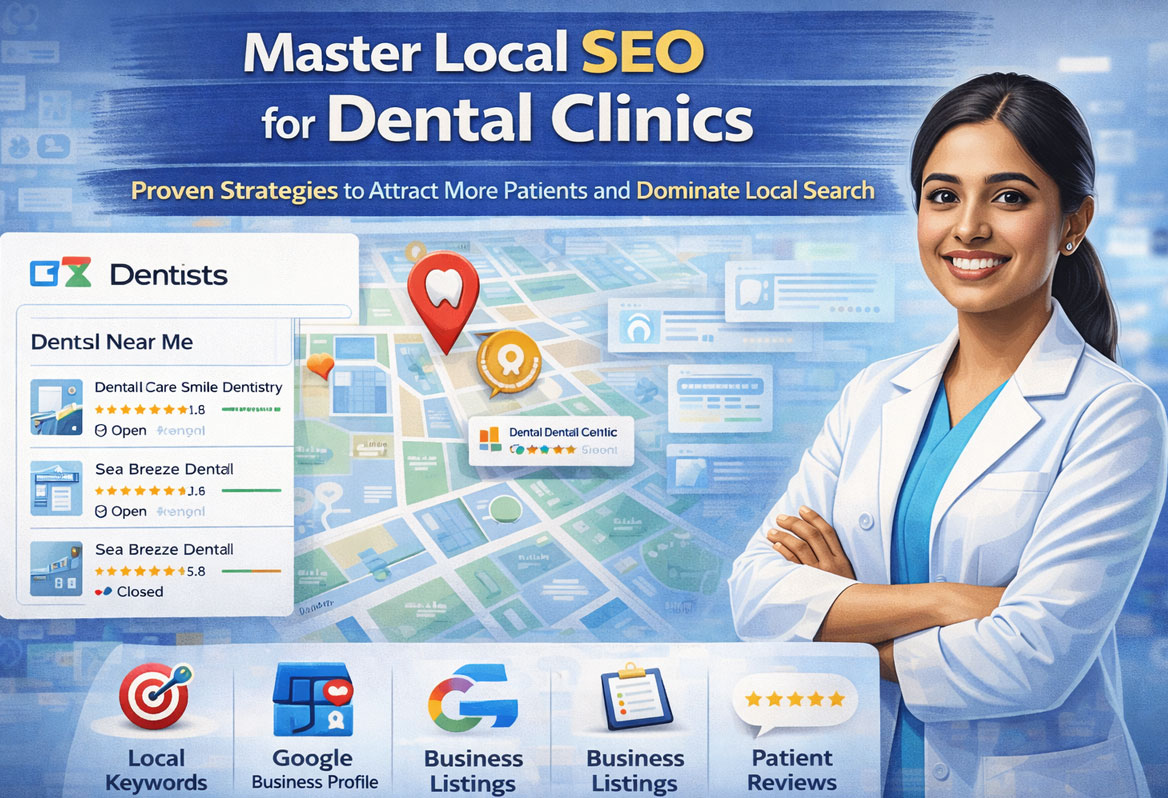
 Optimize your Google Business Profile (GBP) to increase local visibility and appear in the local map pack.
-
 Build and manage accurate local citations across trusted dental and healthcare directories.
-
 Prioritize mobile-first website design and optimize on-page SEO to improve user experience and search rankings.
-
 Encourage and manage patient reviews to build trust, credibility, and stronger local rankings.
-
 Use advanced tactics like schema markup and local link building to strengthen your clinic’s authority.
-
 By following these strategies, you can improve local search visibility, attract more patients, and grow your dental practice.
Introduction
Did you know that 93% of patients use online search to find a local healthcare provider? In today’s competitive market, simply having a website isn’t enough. To stand out, dental clinics must master local SEO to attract more patients and grow their practices.
Local SEO is the process of optimizing your online presence to attract more local patients. This includes optimizing your Google Business Profile (GBP), building local citations, leveraging patient reviews, and implementing advanced local SEO strategies. When done right, local SEO can significantly increase your clinic’s visibility in local search results, driving more traffic and patient inquiries.
In this guide, we’ll walk you through the essential steps to optimize your dental clinic’s local SEO. We’ll cover everything from GBP optimization and local citations to patient reviews and advanced strategies like schema markup and local link building. Whether you’re a dental clinic owner, practice manager, or healthcare marketer, this guide will provide you with the tools and knowledge you need to dominate local search and attract more patients.
Why Local SEO Matters for Dental Clinics
Local SEO is critical for dental clinics because it directly impacts your ability to attract new patients. Here’s why:
- Local Search Drives Patient Decisions: 93% of patients use online search to find a local healthcare provider (BrightLocal).
- Google Maps Dominance: 63% of users prefer Google Maps over other navigation apps, making it a critical platform for local visibility (Statista).
- Mobile Searches: 58% of searches for dental services come from mobile devices (SEMrush, 2023).
- Reviews Influence Choices: 88% of patients trust online reviews as much as personal recommendations (Podium).
Dr. Greg Grillo, a dental marketing expert, emphasizes, “Local SEO is the cornerstone of modern dental marketing. It’s not just about ranking higher; it’s about being the most visible and trustworthy option for patients in your area.”
Step-by-Step Local SEO Strategies for Dental Clinics
Step 1: Optimize Your Google Business Profile (GBP)
Your Google Business Profile is the foundation of local SEO. Here’s how to optimize it:
1. Complete Every Section: Fill out all fields, including name, address, phone number (NAP), website, hours, and services offered.
2. Choose the Right Categories: Select primary and secondary categories (e.g., “Dentist,” “Cosmetic Dentist,” “Emergency Dental Care”).
3. Add High-Quality Photos: Include professional photos of your clinic, team, and services to build trust and attract patients.
4. Encourage Patient Reviews: Ask satisfied patients to leave positive reviews on your GBP. Respond to reviews promptly to show you value patient feedback.
For more detailed GBP optimization tips, check out our guide on Google Business Profile tips.
Step 2: Build and Manage Local Citations
Local citations are mentions of your clinic’s NAP (name, address, phone number) on other websites, such as directories and review sites. Consistent citations help Google verify your clinic’s location and improve your local rankings.
1. List Your Clinic on Relevant Directories: Start with popular directories like Google My Business, Yelp, and Healthgrades.
2. Ensure NAP Consistency: Make sure your clinic’s NAP is consistent across all directories.
3. Monitor and Update Listings: Regularly check your listings for accuracy and update them as needed.
Step 3: Focus on Mobile-First Website Design
With 58% of searches for dental services coming from mobile devices, having a mobile-friendly website is crucial. Here’s how to optimize your website for mobile users:
1. Use Responsive Design: Ensure your website adapts to different screen sizes.
2. Optimize Page Speed: Compress images and use caching to improve load times.
3. Simplify Navigation: Make it easy for users to find information on your website.
For more tips on improving your website’s visibility, read our guide on improve website visibility.
Step 4: Leverage Patient Reviews
Patient reviews are a powerful tool for building trust and improving your local rankings. Here’s how to get more reviews:
1. Ask Satisfied Patients: Politely ask patients to leave a review after their appointment.
2. Make It Easy: Provide links to your review profiles in follow-up emails and on your website.
3. Respond to Reviews: Thank patients for positive reviews and address any concerns raised in negative reviews.
Step 5: Use Advanced Local SEO Strategies
Beyond the basics, there are advanced strategies that can further boost your local SEO:
1. Schema Markup: Add structured data to your website to help Google understand your content better.
2. Local Link Building: Get backlinks from local websites, such as news outlets and community organizations.
3. Track Your Progress: Use tools like Google Analytics and Google Search Console to monitor your rankings and make data-driven decisions.
For a deeper dive into advanced local SEO strategies, check out our local SEO guide.
FAQ
FAQs
The most important aspect is optimizing your Google Business Profile (GBP). Your GBP is the first thing patients see when searching for a dentist, so it’s crucial to ensure it’s complete and accurate.
Ask satisfied patients to leave a review after their appointment. Provide links to your review profiles in follow-up emails and on your website. Respond to reviews promptly to show you value patient feedback.
Local citations are mentions of your clinic’s NAP (name, address, phone number) on other websites. Consistent citations help Google verify your clinic’s location and improve your local rankings.
Use responsive web design to ensure your website adapts to different screen sizes. Optimize page speed by compressing images and using caching. Simplify navigation to make it easy for users to find information.
Consider using schema markup to help Google understand your content better. Build local backlinks from local websites, such as news outlets and community organizations. Track your progress using tools like Google Analytics and Google Search Console.
Both have their benefits. Google Ads can provide immediate visibility, while local SEO offers long-term, sustainable results. For a detailed comparison, check out our guide on Google Ads vs local SEO.
Use tools like Google Analytics and Google Search Console to monitor your rankings, traffic, and conversions. Regularly review your GBP insights to track how patients are finding and interacting with your profile.
Ready to Grow Your Dental Practice?
Optimizing your dental clinic’s local SEO can seem overwhelming, but with the right strategies in place, you can attract more patients and grow your practice. If you’re ready to take your local SEO to the next level, our expert team is here to help you dominate local search results and increase appointment bookings.

Pooja Garg
Pooja Garg is the founder of Sky Storm Digital, a creative digital marketing agency dedicated to helping brands grow through strategy, storytelling, and design. With a passion for blending creativity and data-driven insight, Pooja writes about digital marketing trends, brand building, and the ever-evolving online landscape.
When she’s not crafting campaigns, she’s exploring new ways to connect creativity with technology.