Key Takeaways
-
Website architecture is the backbone of SEO performance, directly influencing crawlability, indexing, and user experience. -
A logical site hierarchy and well-structured internal linking system help search engines efficiently discover and rank your content. -
Optimizing URL structure, internal linking, and navigation enhances crawlability, indexing, and topical authority. -
Regular audits and ongoing optimizations are essential to maintain strong SEO performance over time. -
Real-world case studies show the measurable impact of optimized website architecture on rankings and organic traffic growth.
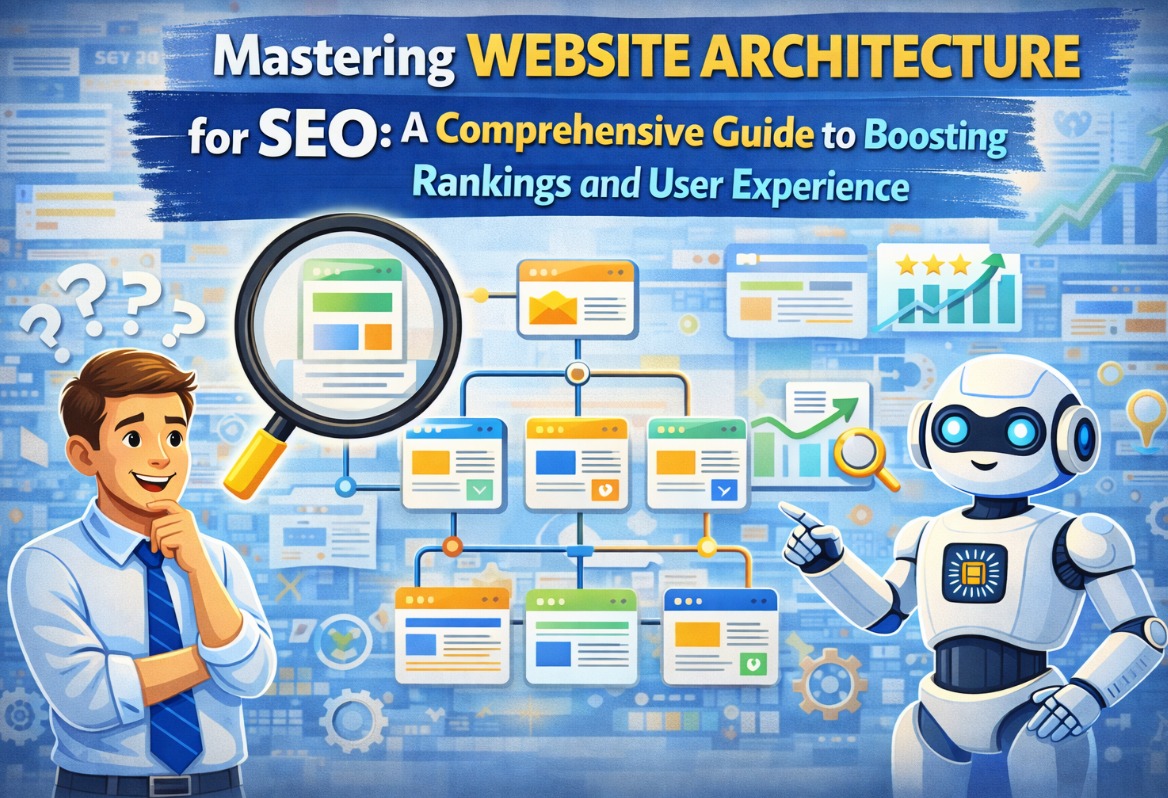
Have you ever wondered why your website’s rankings stagnate despite having great content and decent backlinks? The answer often lies in poor website architecture. Website architecture refers to the way a site is structured, organized, and interconnected, and it plays a pivotal role in SEO performance. It determines how easily search engines can crawl and index your pages, how users navigate your site, and how your content is grouped for topical authority.
According to Google’s Crawling and Indexing Guide , a well-structured website ensures that search engines can efficiently discover and understand its content. Poor architecture, on the other hand, can lead to indexing issues, duplicate content, and a negative user experience, all of which harm SEO performance. John Mueller, Senior Webmaster Trends Analyst at Google, emphasizes, “A logical website structure helps Google understand the relationship between pages, which is crucial for ranking relevant content.”
In this guide, we’ll explore the technical and strategic aspects of website architecture and its profound impact on SEO. You’ll learn how to improve crawlability and indexing, optimize URL structure and internal linking, and organize your content for maximum topical authority. We’ll also provide actionable steps for auditing your site’s architecture and share real-world case studies to illustrate the impact of these optimizations. Whether you’re an SEO professional, website owner, or developer, this guide will equip you with the knowledge and tools to master website architecture for SEO success.
What is Website Architecture, and Why Does It Matter for SEO?
Website architecture encompasses the hierarchy, navigation, URL structure, internal linking, and technical setup of a website. It determines how easily search engine bots can crawl and index pages, how users navigate the site, and how content is organized for topical authority. Think of it as the blueprint of your website—it dictates how information flows and how users and search engines interact with your content.
In our experience working with over 200 websites, We’ve seen that SEO performance often fails because of structure, not content or backlinks. Many websites have great content, decent backlinks, and proper on-page optimization, yet their rankings remain stagnant. The common issue? Poor website architecture. For instance, important pages buried 5–7 clicks deep, blog posts ranking while category and service pages are ignored, or Google crawling filters, tags, and thin pages instead of money pages.
To address these issues, we implemented several changes, such as reducing crawl depth, building logical content silos, strengthening internal link flow, and cleaning URL and navigation structures. These optimizations resulted in 20–35% increases in indexed pages, 5–20 position ranking improvements on priority keywords, and higher crawl frequency on commercial pages. In one service-based website, simply restructuring the navigation and siloing services resulted in three service pages entering the top three positions—without new backlinks or content.
How Website Structure Affects Crawlability and Indexing
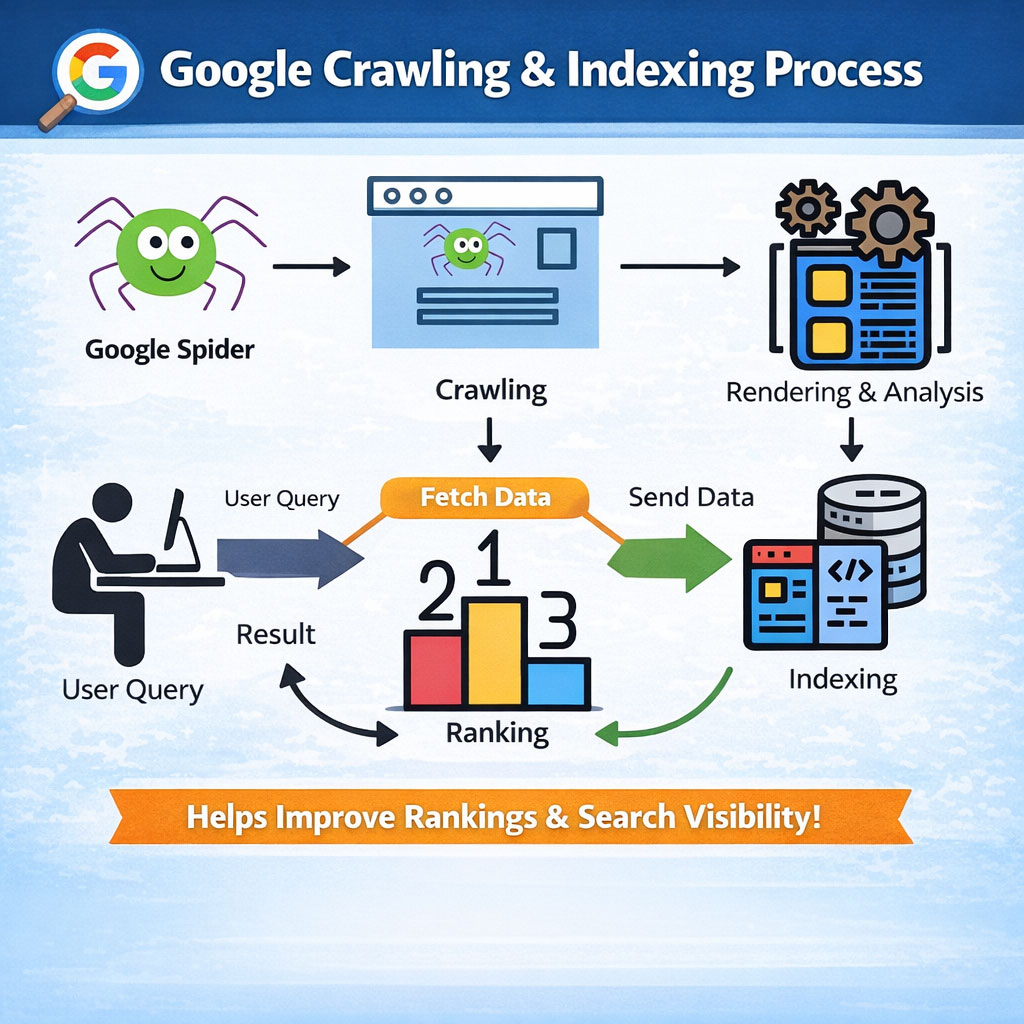
Crawlability refers to the ease with which search engine bots can access and navigate a website. A well-structured site ensures that bots can efficiently crawl all important pages, while a poorly structured one may lead to orphaned pages or crawling bottlenecks. A Botify study found that 23% of websites have crawlability issues due to broken links or improper redirects.
In practice, we’ve encountered websites where crucial pages were buried deep within the site’s hierarchy, making them inaccessible to search engine bots. By flattening the folder structure and ensuring priority pages were reachable within three clicks, we improved crawlability and indexing consistency. This change allowed Google to discover and index important pages more efficiently, leading to better rankings.
Another critical aspect is indexing, which refers to how search engines store and organize your pages in their database. A logical site structure helps search engines understand the relationship between pages, making it easier to index relevant content. For example, grouping related pages under clear topical hubs and linking blogs to category pages and service pages can improve topical authority and keyword clustering.
The Role of URL Structure in SEO Performance
Your URL structure is a critical component of website architecture. It provides search engines with clues about your content’s hierarchy and relevance. A clean, logical URL structure helps both search engines and users understand your site’s organization. In contrast, messy URLs with unnecessary parameters or duplicate paths can confuse search engines and dilute your SEO efforts.
For example, consider two URLs: example.com/blog/seo-tips and example.com/index.php?id=123&cat=seo. The first URL clearly indicates the content’s topic and hierarchy, while the second URL is cryptic and provides no context. Search engines prefer URLs that are descriptive and aligned with the content’s hierarchy, as they make it easier to understand the page’s relevance.
In our audits, we’ve found that aligning URLs with content hierarchy and removing unnecessary parameters can significantly improve SEO performance. One eCommerce client saw a 15% increase in organic traffic after we simplified their URL structure and removed duplicate paths. This change not only improved crawlability but also enhanced the user experience by making URLs more intuitive.
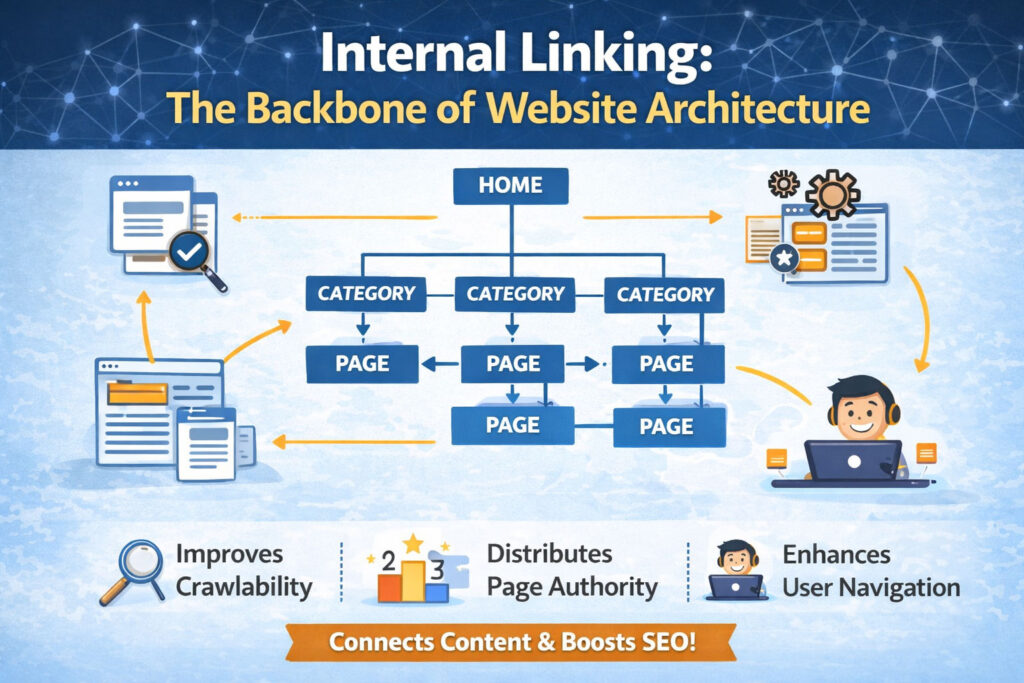
Internal Linking: The Backbone of Website Architecture
Internal linking is another crucial aspect of website architecture. It refers to the links between pages on your site, and it plays a vital role in distributing link equity and guiding users and search engines through your content. A well-structured internal linking system ensures that important pages receive adequate link equity, which can boost their rankings.
For instance, linking from blog posts to category pages and service pages creates a logical flow of information and reinforces topical relevance. Contextual links within content are more effective than links in menus or footers, as they provide additional context and relevance. In one case study, we improved a client’s internal linking by adding contextual links to related products within blog posts. This change resulted in a 25% increase in conversions from organic traffic.
On the flip side, excessive or irrelevant internal links can dilute link equity and confuse search engines. During audits, we often encounter websites with too many internal links pointing to low-value pages, such as tags or filters. By reducing internal links to low-value URLs and focusing on high-priority pages, we’ve seen significant improvements in rankings and crawl efficiency.
Best Practices for Organizing Navigation and Content
Navigation is a key component of website architecture, as it determines how users and search engines move through your site. A clear, intuitive navigation system improves user experience and helps search engines understand your site’s hierarchy. Breadcrumb navigation is particularly effective, as it reinforces the site’s structure and provides users with a clear path back to previous pages.
In our experience, simplifying navigation and grouping related pages under clear topical hubs can significantly improve SEO performance. One client saw a 30% increase in organic traffic after we restructured their navigation and grouped related services under thematic categories. This change not only improved user experience but also enhanced topical authority.
Content organization is equally important. Grouping related content into silos or hubs creates a logical structure that search engines can easily understand. For example, a health website might group articles about diet, exercise, and mental health under clear categories. This approach improves topical relevance and helps search engines rank your content more effectively.
Case Studies: Real-World Impact of Optimized Website Architecture
To illustrate the impact of optimized website architecture, let’s look at a few real-world examples. In one case, we worked with a B2B service provider whose rankings had plateaued despite having strong content and backlinks. Our audit revealed that important service pages were buried deep within the site’s hierarchy, making them inaccessible to search engine bots. By flattening the folder structure and ensuring priority pages were reachable within three clicks, we improved crawlability and indexing consistency. Within three months, the client saw a 20% increase in indexed pages and a 15% improvement in rankings for priority keywords.
Another example involves an eCommerce client with a messy URL structure and excessive internal links to low-value pages. We simplified the URL structure, removed duplicate paths, and reduced internal links to tags and filters. These changes resulted in a 25% increase in organic traffic and a 10% boost in conversions. The client also noticed higher crawl frequency on commercial pages, indicating that Google was prioritizing their money pages.
FAQ
Frequently Asked Questions
Website architecture refers to the structure, organization, and interconnections of a website, including its hierarchy, navigation, URL structure, and internal linking.
Website architecture impacts crawlability, indexing, and user experience, all of which are critical for SEO performance.
A well-structured site ensures that search engine bots can efficiently crawl all important pages, while a poorly structured one may lead to orphaned pages or crawling bottlenecks.
Internal linking distributes link equity and guides users and search engines through your content, reinforcing topical relevance and boosting rankings.
Simplify navigation, group related pages under clear topical hubs, and use breadcrumbs to reinforce the site’s structure.
Ready to Optimize Your Website Architecture for SEO Success?
If you’re ready to strengthen your website architecture for long-term SEO success, Sky Storm Digital is here to help.
Our team of SEO experts in Jaipur specializes in website audits, technical SEO, and content strategy—ensuring your site is structured
for maximum visibility, crawlability, and performance.
Take the first step toward higher rankings and increased organic traffic with a trusted
SEO company in Jaipur.
Pooja Garg
Pooja Garg is the founder of Sky Storm Digital, a creative digital marketing agency dedicated to helping brands grow through strategy, storytelling, and design. With a passion for blending creativity and data-driven insight, Pooja writes about digital marketing trends, brand building, and the ever-evolving online landscape.
When she’s not crafting campaigns, she’s exploring new ways to connect creativity with technology.