Type “best CA firm in Pune for startups” into ChatGPT and you’ll get three or four firm names back, usually with links. Try it in Marathi on Google AI Mode. Same thing. AI SEO in India comes down to one question: is your business one of the names that shows up, and if not, what would it take to get there, because the answer is a lot less mysterious than most agency pages would have you believe, and it starts with the boring stuff (robots.txt, page structure) before it ever gets to Hindi pages and brand mentions.
Key takeaways
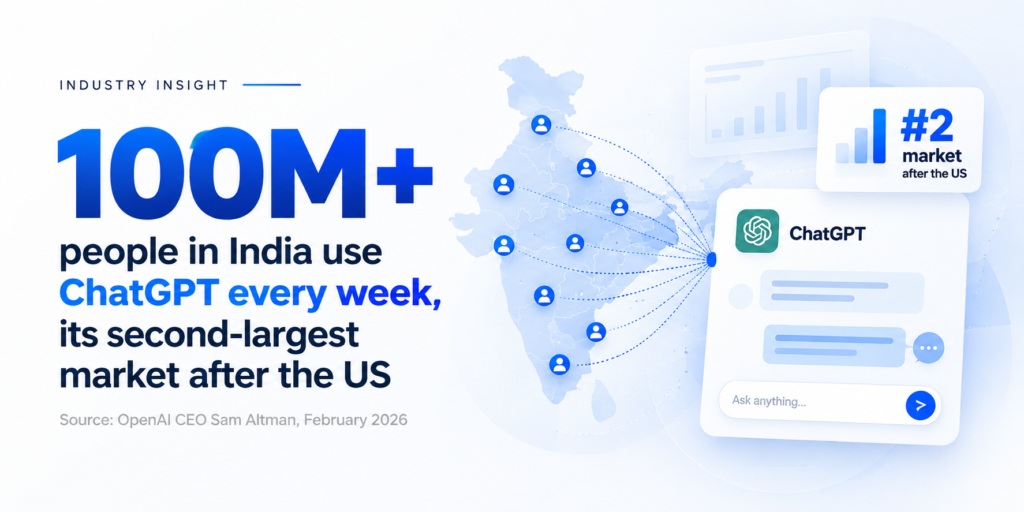
- India has more than 100 million weekly ChatGPT users. Only the US has more.
- Google says AI Overviews and AI Mode need no special optimization; a page just has to be indexed and allowed to show a snippet.
- Block OAI-SearchBot and you disappear from ChatGPT search answers. Google-Extended is a different story and won’t touch your Google rankings.
- In Ahrefs’ 75,000-brand study, brand mentions lined up with AI visibility about three times as closely as backlink counts did.
- Search Console lumps AI Mode clicks in with everything else, so you’ll need GA4 referrals and a monthly prompt check too.
What is AI SEO?
AI SEO means getting your pages and your brand quoted inside AI-written answers, whether that’s ChatGPT search, Google’s AI Overviews and AI Mode, Gemini or Perplexity. You’ll also hear it called generative engine optimization (GEO) or answer engine optimization (AEO). Same job. You want to be the source an AI system trusts enough to quote, and ideally link.
Classic SEO still carries most of the weight, and we’d push back on anyone who tells you otherwise, since AI engines lean on search indexes to find candidate pages in the first place and a site Google or Bing can’t crawl properly rarely gets cited by anything. The prize shifts, though. You’re no longer chasing position three out of ten blue links; you’re trying to be one of maybe three to eight sources sitting next to an answer the user might never scroll past.
How big is AI search in India?
Bigger than most marketing plans assume. OpenAI’s CEO Sam Altman said in February 2026 that more than 100 million people in India use ChatGPT every week (India TV News), second only to the US and well ahead of every other country in Asia. That’s a lot of people asking a chatbot where they used to scroll a results page.
Google hasn’t been sitting still either. Back in October 2025 its India team announced that AI Mode now works in Bengali, Kannada, Malayalam, Marathi, Tamil, Telugu and Urdu alongside English and Hindi, and that people ask it questions nearly three times longer than traditional searches (Google India Blog). India also got Search Live, the voice-and-camera mode, before any other country outside the US did.
Then there’s Lens. Google’s year-end numbers, as reported by Social Samosa, say more people use Google Lens each month in India than in any other country (Social Samosa). Picture someone in a Jaipur store snapping a photo of a pressure cooker and asking AI Mode where it’s cheaper online; the product pages that win that moment are the ones with proper photos, model numbers and a visible price, and plenty of Indian ecommerce sites still don’t have those, frankly.
How do ChatGPT, Gemini and Google AI Mode choose sources?
They search first. Writing comes after. Google describes AI Mode and AI Overviews as using “query fan-out”, issuing multiple related searches across subtopics (Google Search Central) before it puts an answer together, and ChatGPT search can only pull from pages OpenAI’s search crawler has been allowed to reach, so if your page doesn’t turn up in those background searches, how well it’s written doesn’t matter one bit.
| Engine | Where sources come from | Crawler to allow | Where clicks show up |
|---|---|---|---|
| Google AI Overviews and AI Mode | Google's search index | Googlebot | Search Console, Web search type |
| Gemini app | Google Search for current information | Googlebot | GA4 referrals from gemini.google.com |
| ChatGPT search | OpenAI's search crawl | OAI-SearchBot | GA4 referrals from chatgpt.com |
Google doesn’t dress this up. Its documentation says “There are no additional requirements to appear in AI Overviews or AI Mode, nor other special optimizations necessary” (Google Search Central), and the only bar it sets is that a page is indexed and eligible to show with a snippet. So when someone pitches you a secret AI Mode markup, you can point them to that line.
OpenAI’s rules are just as short. According to its crawler documentation, sites opted out of OAI-SearchBot “will not be shown in ChatGPT search answers” (OpenAI), while GPTBot is only about whether your content gets used to train models, and people mix the two up all the time. It’s the first thing our ChatGPT SEO service checks.
The 7-step AI SEO playbook for Indian businesses
Order matters here. The first two steps are quick, maybe a week between them, while steps 4 and 5 keep running for months, and skipping ahead to brand mentions on a site that blocks OpenAI’s crawler is, well, money spent on the wrong problem.
1. Let the right crawlers in
Open robots.txt first. Check that Googlebot, Bingbot and OAI-SearchBot aren’t disallowed, then go one level deeper into your CDN or firewall settings, because bot protection on Cloudflare and similar services can quietly block AI crawlers even when robots.txt says they’re welcome, and the marketing team is usually the last to find out.
Google-Extended is its own decision. Google states that Google-Extended “does not impact a site’s inclusion in Google Search nor is it used as a ranking signal” (Google Search Central), and all it controls is whether your content can be used for Gemini model training. Block it or don’t. Your rankings won’t notice.
2. Put the answer first in every section
AI engines quote passages. If a section spends two paragraphs on background and only answers the question in the third, there’s nothing tidy for the engine to lift, so open each H2 with a direct answer of somewhere around 40 to 80 words and expand from there. Question-style headings help too. They mirror how people type prompts.
3. Publish facts only you can supply
Nobody needs another generic tips page. Numbers that only exist on your site get cited, like your average project cost in rupees or how many days delivery really takes to Guwahati versus Pune. No competitor can copy those. A Jaipur interior designer who publishes actual per-square-foot rates for 2BHK flats hands ChatGPT a fact it can attribute, something a line like “affordable pricing” never will.
4. Earn brand mentions, then links
The numbers on this surprised us. Ahrefs looked at 75,000 brands and found that branded web mentions correlated with AI Overview visibility at 0.664, against 0.218 for the number of backlinks (Ahrefs). Correlation only goes so far, of course, though a gap that wide was enough for us to move a good chunk of outreach time away from link chasing.
For an Indian business, mentions tend to come from trade associations, regional business papers, podcast spots, LinkedIn posts that get reshared and comparison pieces on independent sites that you don’t control. Slow work. We went into more detail on why brand mentions now rival backlinks, including how to find the unlinked ones you already have.
5. Keep your entity details identical everywhere
AI systems cross-check what they find. If your Google Business Profile says “Sharma Dental Clinic” while Justdial lists you as “Dr Sharma’s Dental Care”, the model ends up with two shaky signals where one solid one should be, and it may not be confident enough to name you at all. Fix it.
Choose one exact business name and one address format and push it to every listing, IndiaMART, LinkedIn and Crunchbase included if you’re on them.
6. Add structured data that matches the page
Schema alone won’t get you cited. Organization, LocalBusiness, Product and FAQPage markup help search engines understand a page, and that can help it surface in fan-out searches, but we treat it as hygiene and nothing more. One catch worth remembering: Google’s structured data guidelines expect markup to describe content a visitor can see, so when prices or FAQs change on the page, the schema has to change with them.
7. Write for the languages your buyers search in
AI Mode now works in eight Indian languages plus English, and the Hindi or Tamil version of your best service page is competing against far fewer well-written pages than the English one is (we’d guess a fraction, though nobody publishes clean numbers on this).
Get it written properly. Local examples, local pricing, a human reviewer, and no raw machine translation. Our GEO and AI SEO team usually picks the one or two pages already converting best in English and starts there.
How do you measure AI search visibility?
No single tool does it. Google counts AI Overviews and AI Mode traffic inside Search Console’s Performance report under the “Web” search type (Google Search Central). You can’t pull it out as a separate line there, so GA4 has to fill part of the gap: filter referral traffic for chatgpt.com, gemini.google.com and perplexity.ai and watch the trend.
The last piece is manual, and it’s the one most teams skip. Keep a spreadsheet of 20 to 30 prompts your buyers would really type, run them through ChatGPT, Gemini and AI Mode once a month, and mark each one as cited, mentioned or missing. About an hour’s work. Six months of that spreadsheet will tell you more than most dashboards do.
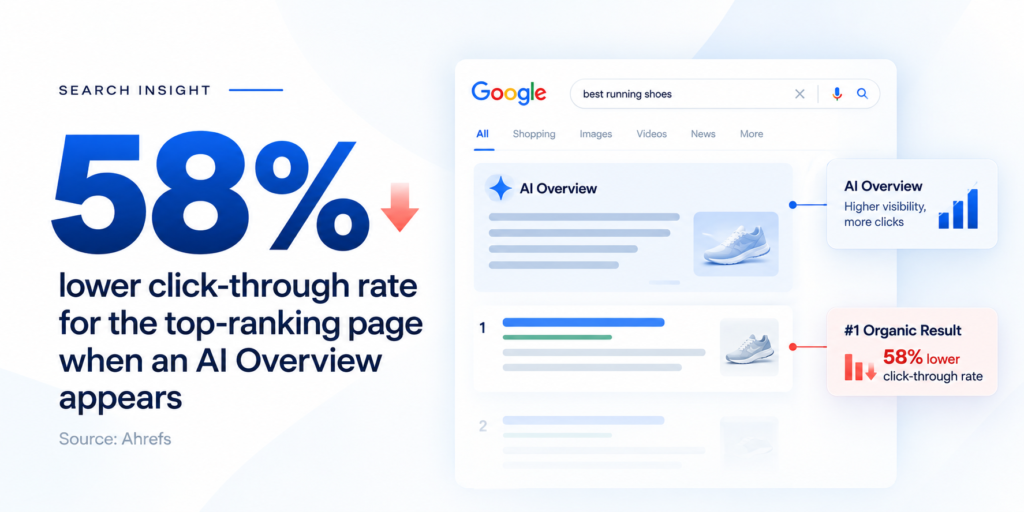
Be ready for clicks to drop. Visibility can grow at the same time, and Ahrefs found that an AI Overview correlates with a 58% lower average click-through rate for the top-ranking page (Ahrefs, December 2025 data), so if you only report traffic, the AI SEO work will look like it’s failing when it isn’t. Report leads and branded searches next to it.
Which AI SEO myths should you ignore?
Start with the big one. Plenty of people now claim AI SEO replaces SEO, and Google’s own documentation says otherwise, since it ties AI feature eligibility to plain old indexing and snippet eligibility, so a site with crawl errors, thin pages or a broken canonical setup loses in AI Mode for exactly the reasons it loses in the blue links. That’s why our technical SEO audit guide is still step zero for us.
Two smaller ones keep coming up. Blocking GPTBot supposedly hides you from ChatGPT (it doesn’t, it only covers model training), and somebody always has “special AI Mode markup” to sell, though Google has said in writing that no such thing is needed.
Last, paid placements. Getting your agency onto a cheap “top 10 agencies in India” listicle can earn a citation for a few weeks, until better sources come along and the engine quietly drops it.
Where to start this week
Keep it small. Take your five most valuable service or product pages and run the first three steps on them, crawler access first, then write your 20 prompts and run them once so you have a baseline to compare against next month. If you’d like a second pair of eyes on that baseline, send us the spreadsheet with your domain and we’ll mark the three gaps we’d fix first.
Frequently asked questions
SEO chases rankings in a list of links, while AI SEO chases citations inside a written answer, and the groundwork overlaps a lot because AI engines search an index before they write anything. The extras are answer-first writing, original facts and brand mentions. That’s most of it.
No. OpenAI says GPTBot only decides whether your content is used for model training, and OAI-SearchBot is the one that decides whether your pages can appear in ChatGPT search answers, so you can block the first and allow the second. Check your firewall as well. A CDN rule can block OAI-SearchBot even when robots.txt allows it.
It depends on the fix. Technical changes like unblocking a crawler can show up within a few weeks, once the pages get recrawled, but citations that depend on brand mentions take longer (usually a few months) because those mentions have to be published somewhere and then picked up in fan-out searches. We track progress monthly with a fixed prompt list so we can see movement early, even before traffic budges. Small local businesses sometimes get there faster than national brands, simply because fewer people are competing for “best X in [city]” prompts. If you want to know where you stand right now, our free SEO audit includes a check of your AI crawler access.
Yes. Local and niche questions are the easiest way in, and a Kota coaching institute with clear fee details, consistent listings and a couple of local news mentions has a decent shot at city-specific prompts.
It can. Probably more than most people expect, too, because AI Mode supports Hindi and seven other Indian languages, yet far fewer businesses publish well-written Hindi pages, so the field is thinner and a careful Hindi version of your best-converting English page has room to stand out.