Key takeaways
- Rule 36 applies online too. In July 2024 the BCI told State Bar Councils to act against advocates soliciting work through portals.
- Your website can carry factual details from the BCI’s approved list, such as enrolment details and practice areas.
- Google allows one Business Profile per advocate, with no keywords stuffed into the name.
- Testimonials, win rates and “best lawyer” claims are where firms get into trouble.
- Plain-language legal explainers are the safest way to rank, and AI Overviews have raised the bar for them.
Most law firm SEO checklists online were written for American attorneys. They tell you to collect five-star testimonials, run “free case evaluation” banners and list yourself on every directory going. Try that as an advocate in Jaipur and you could end up answering a complaint before your State Bar Council, because Indian lawyers work under Rule 36 of the Bar Council of India Rules, and the BCI spent much of 2024 and 2025 enforcing it online. So our checklist starts from what’s allowed. Plenty is, as it turns out. One caveat up front: we’re a marketing agency, not lawyers, so treat the compliance bits as a starting point and confirm anything borderline with your Bar Council.
Can lawyers in India do SEO at all?
Yes. Rule 36 bans advocates from soliciting work or advertising, but a later amendment added a proviso letting them furnish website information “as prescribed in the Schedule”, and itatonline has the resolution text if you want to read it yourself.
Read the fine print, though. Per that same resolution, any “additional other input in the particulars” beyond what the Council approved is deemed a violation, and advocates who cross the line can face misconduct proceedings under Section 35 of the Advocates Act, 1961. So yes to the website, on a very short leash.
Enforcement picked up in 2024. After a Madras High Court ruling on 3 July 2024, the BCI sent cease-and-desist notices to Quikr, Sulekha, Just Dial and Grotal.com and gave the platforms four weeks to pull illegal legal-services ads, according to SCC Online’s report on the BCI directions. State Bar Councils were told to report back by 10 August 2024. Then on 17 March 2025 came a fresh BCI caution on social media promotion, aimed squarely at influencer-style videos, celebrities included.
What can a law firm website include?
Stick to the BCI’s list. Going by what the Council told the Supreme Court in 2008 (itatonline reproduces the newspaper report), advocates can show:
- Name, office address, phone number and email
- Enrolment number and date of enrolment
- The State Bar Council you first enrolled with, and the one you’re on now
- Bar associations you belong to
- Professional and academic qualifications
- Areas of practice
- Experience, which the bench suggested and the BCI said it would accept, so your years in practice can go up
That list is shorter than most agencies would like. It’s still enough to rank, because Google mostly needs to know who you are and what kind of matters you take on in which part of town, and a clean page per practice area does that job without a single adjective about how brilliant you are.
| Usually fine | Risky under Rule 36 |
|---|---|
| Practice area pages explaining the law and the process | “Best divorce lawyer in Jaipur” claims |
| Enrolment number, Bar Council and qualifications | Client testimonials and star ratings on the site |
| Articles explaining legal procedures | Win rates, case counts, “100% success” |
| A contact form and an office map | “Free consultation” pop-ups and WhatsApp blasts |
A lot of firms we talk to already have testimonials up, usually left over from a template theme. Take them down. Nothing in the Schedule mentions them, and the resolution treats anything outside the approved particulars as a violation, so a glowing quote from a happy client is a risk you carry for very little SEO benefit.
How should a law firm set up its Google Business Profile?
Carefully, because Google’s practitioner rules trip up plenty of firms. Under Google’s Business Profile guidelines, a public-facing advocate who can be contacted directly at the verified office during stated hours can have a profile of their own. Support staff can’t. Nobody gets a second profile to cover another specialisation either.
Solo practitioners are different. If you’re the only public-facing advocate at a location and you work under a firm brand, Google wants one shared profile named “[Firm]: [Advocate name]”. Two more details catch people out: no keywords in the name (so “Sharma & Associates”, never “Sharma & Associates Best Criminal Lawyer Jaipur”), and no virtual offices or PO boxes, since Google says a rented mailing address you don’t operate from doesn’t make you eligible.
Is a Business Profile itself advertising? Nobody has tested that properly, as far as we know. Most advocates treat it like their website and keep it factual, which is the line we’d take too: the right category (Lawyer, or the closest legal one), real office hours, and a description that reads like your enrolment card rather than a hoarding on Tonk Road. Our Google Business Profile playbook for Jaipur covers the setup screen by screen.
Can law firms ask clients for Google reviews?
Reviews are the murkiest part. Clients clearly care about them: BrightLocal’s 2026 Local Consumer Review Survey found 97% of consumers read reviews for local businesses, and 74% only care about reviews from the last three months. Those were US respondents, though we doubt people hunting for a lawyer in Jaipur behave very differently.
Asking is where Rule 36 gets awkward. A polite one-off request to a client whose matter has closed probably reads as feedback, whereas a review drive with QR codes on the reception desk and a WhatsApp nudge two days later looks a lot more like soliciting. Our advice: don’t push. Never offer anything in return, and when you reply to a review, say nothing that confirms the person was your client, because confidentiality doesn’t stop applying on Google Maps.
What content should a law firm publish?
Explainers. People search for legal problems long before they search for a lawyer, typing things like “mutual consent divorce how many months” or “FIR not registered by police what to do” into their phones at 11pm, and a firm that answers those clearly in plain English (or Hindi) earns the visit without advertising anything.
Write the page the way you’d explain it across the desk. For the divorce query, that means the six-month cooling-off period under Section 13B(2) of the Hindu Marriage Act, plus the Supreme Court’s 2017 ruling in Amardeep Singh v Harveen Kaur that family courts can waive it in the right case. Google likes specifics like that.
Thin pages are pointless now. In a February 2026 study, Ahrefs found AI Overviews correlate with a 58% lower clickthrough rate for the top-ranking page, using December 2025 data on 300,000 keywords set against a 2023 baseline. Short definitions (“what is anticipatory bail”) are exactly what Google now answers on its own, so the pages holding up for our clients tend to be longer and local, like how a bail application moves through the Rajasthan High Court’s Jaipur bench.
Put the advocate’s name on each article and link it to an author page with the enrolment details. Legal content is the kind of thing Google holds to a higher standard, and a named, enrolled author is about the clearest trust signal you can give it.
Which technical checks matter for a law firm website?
Fewer than the audit tools suggest. Speed matters most, since a lot of people search from a phone in a court corridor, and Google’s Core Web Vitals guidance wants the main content loaded within 2.5 seconds and taps answered in under 200 milliseconds. Beyond that, we check:
- HTTPS everywhere, the contact form included.
- One page per practice area, each on its own URL, and never a single “Services” page listing eleven things.
- LegalService schema with your address and hours. Leave out review markup, since you shouldn’t be showing ratings anyway.
- Hindi versions of key pages if your clients search in Hindi, with hreflang set up properly.
- An author page for every advocate who writes.
Our technical SEO audit guide goes deeper if your developer wants the long version.
How do law firms build links without advertising?
Slowly, through the profession itself. Bar association member pages, law school alumni profiles, a column in a legal publication, a seminar listing on a chamber of commerce site: those links come from being a working advocate, which is about as far from “advertising” as SEO gets.
Paid directories are a different story. Justdial and Sulekha, two of the portals that got BCI notices in 2024, are also where plenty of Jaipur firms used to buy premium placement. If you’re still paying for a “featured lawyer” plan anywhere, cancel it. Keep a basic free listing where the site allows one, and read our notes on link building strategies for 2026 for the safer routes.
What should law firms stop doing right now?
If any of these are live on your site or social accounts, we’d fix them this week.
- Calling yourself the “best” or “top” anything, including in page titles and profile names.
- Client testimonials and star-rating widgets on the website.
- Success rates and case counts (“500+ cases won”).
- “Free consultation” pop-ups, and paid promotion on Instagram or YouTube.
- Paid premium listings on lawyer portals.
None of this needs a lawyer’s opinion to spot. Most of it came bundled with website templates built for the US market, where attorney advertising is legal, so the fix is usually a morning’s editing.
What does the full checklist look like?
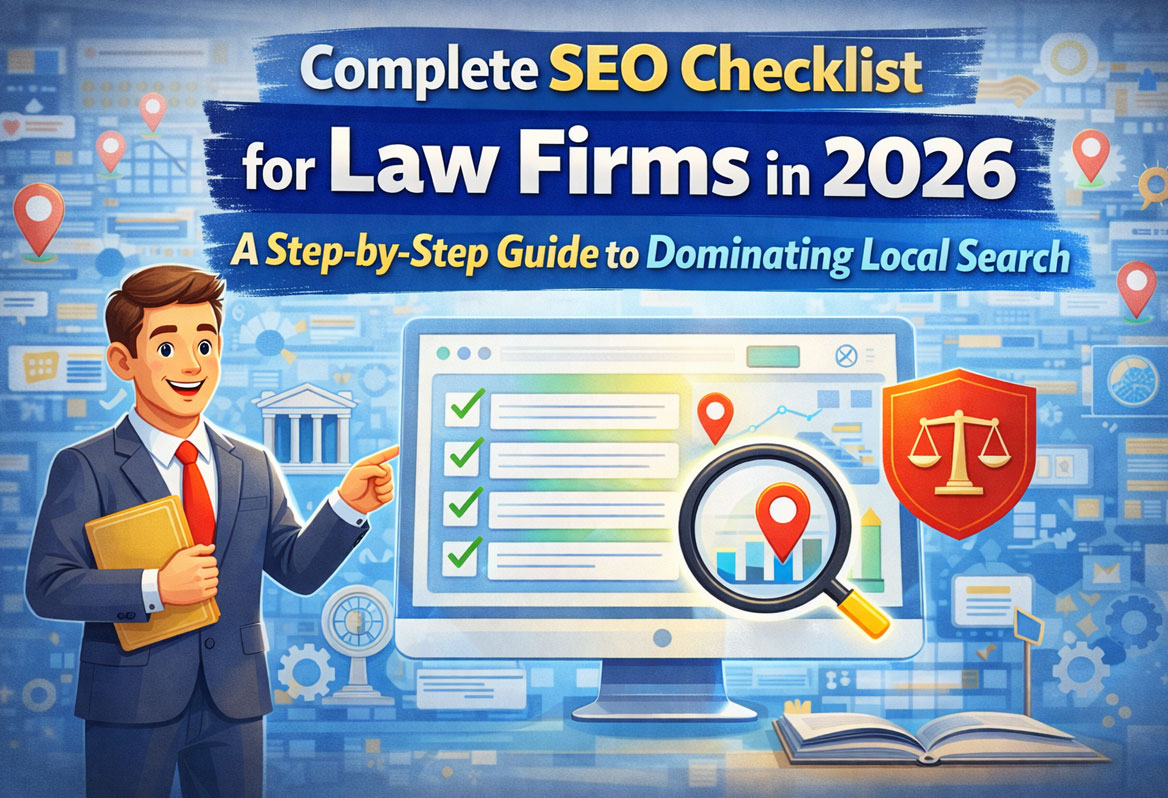
- Read Rule 36 and the approved Schedule, and give a copy to whoever edits your site.
- Strip testimonials, ratings, “best” claims and success rates.
- Build one factual page per practice area.
- Add enrolment number, enrolment date, State Bar Council and qualifications for each advocate.
- Set up or clean up Google Business Profiles under the practitioner rules.
- Take keywords out of the profile name and drop any virtual office.
- Publish one plain-language explainer a fortnight, signed by an advocate.
- Check Core Web Vitals on mobile.
- Add LegalService schema, without review markup.
- Earn links through bar associations and legal writing.
- Cancel paid portal placements.
- Re-check against new BCI circulars every few months. They keep coming.
Want a second pair of eyes on it? Our law firm SEO team in Jaipur audits a site against Rule 36 before we touch rankings, which saves a lot of awkward conversations later.

Pooja Garg
Pooja Garg is the founder of Sky Storm Digital, a creative digital marketing agency dedicated to helping brands grow through strategy, storytelling, and design. With a passion for blending creativity and data-driven insight, Pooja writes about digital marketing trends, brand building, and the ever-evolving online landscape.
When she’s not crafting campaigns, she’s exploring new ways to connect creativity with technology.