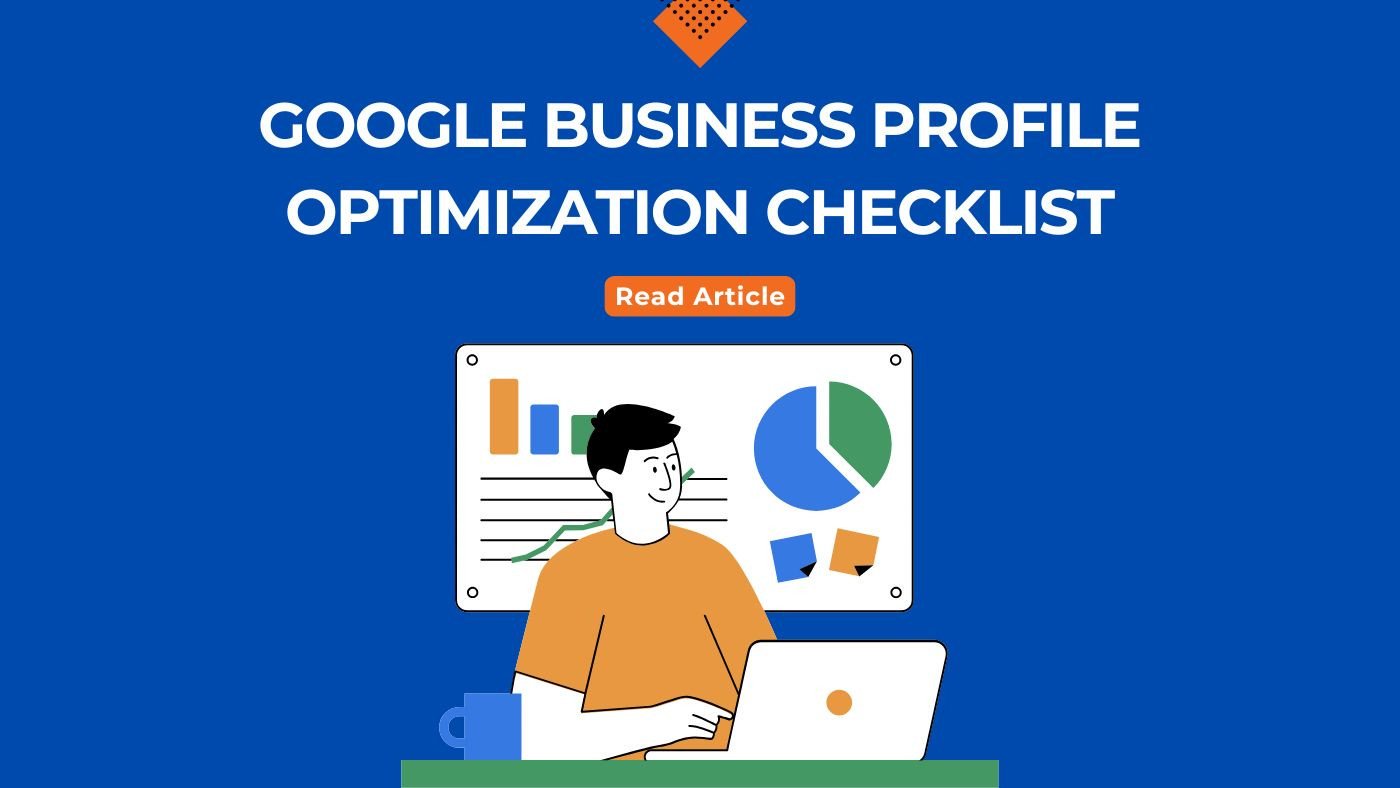
Your Google Business Profile is the single highest-leverage piece of local marketing you own, and most businesses treat it like a phone book listing they filled out once in 2019. That is a mistake with a price tag. When 88% of people who run a local search on their phone call or visit a business within a day, the profile that shows up first in the map pack is the one that gets the customer. This checklist walks through every field, signal, and habit that moves you up, in the order we work through them for clients.
Key takeaways
- A verified, fully completed profile earns roughly 200 clicks or interactions a month on average, and completeness is a direct ranking signal.
- Reviews do heavy lifting: businesses ranking in the local top three carry 250+ reviews on average, and 98% of people read reviews before choosing.
- Photos matter more than owners expect. Top-three profiles hold 250+ images against fewer than 200 for positions four to ten.
- Google Posts, Q&A, and category accuracy are the levers most competitors ignore, which is exactly why they work.
- Optimization is a weekly habit, not a one-time setup. The profiles that win are the ones someone actually maintains.
1. Claim and verify the profile
Everything starts here. An unclaimed or unverified profile cannot be edited, cannot post, and Google treats it as lower trust. Head to Google Business Profile, search for your business, and claim it. If someone else claimed it first, which happens more than you would think with older listings, you can request access and Google mediates the transfer.
- Claim the listing under a business email, not a personal Gmail you might lose access to.
- Complete verification (video, postcard, phone, or email depending on what Google offers you).
- Add every authorized user with the correct role so you are not locked out if one person leaves.
- Remove or merge any duplicate listings, which quietly split your reviews and confuse ranking.
2. Nail the core business information
Google rewards consistency and completeness. Your name, address, and phone number (the NAP) need to match exactly what appears on your website and every other directory, because Google cross-checks those citations to decide whether you are legitimate. One mismatched suite number can hold a profile back.
The fields to complete
- Business name exactly as it appears in the real world, with no keyword stuffing (Google will suspend you for “Best Jaipur Plumber Co” if that is not the legal name).
- Full address, or a defined service area if you visit customers instead of hosting them.
- A local phone number rather than a call-tracking number that changes.
- Accurate hours, including special hours for Diwali, Holi, and other holidays.
- Website URL pointing to the most relevant page, not always the homepage.
- A complete description that uses your services naturally. Only 75% of top-three businesses fill this in, so it is an easy edge.
3. Get categories and services right
Your primary category is one of the strongest ranking signals in the whole profile, and picking the wrong one is the most common self-inflicted wound we see. A “dentist” and a “cosmetic dentist” compete for different searches. Choose the primary category that matches your core service, then add secondary categories for everything else you do.
- Set the single most accurate primary category (this carries the most weight).
- Add relevant secondary categories, but only ones you genuinely serve.
- List individual services under each category with short, plain-language descriptions.
- Turn on relevant attributes (wheelchair accessible, women-owned, free wifi, online appointments).
4. Load real photos and video
Photos are not decoration, they are a ranking and conversion signal. The data is blunt on this: profiles in the local top three carry 250+ images while listings stuck at positions four to ten average fewer than 200. More than that, photos are what a customer scrolls before deciding to call. Blurry or stock imagery reads as “closed or careless.”
- Add a recognizable logo and a strong cover photo.
- Upload real interior and exterior shots so customers can find and trust you.
- Show the team and the work, not stock photography.
- Add short video where it fits (a 30 second walkthrough outperforms a static gallery).
- Refresh photos monthly so the profile signals an active, open business.
5. Build reviews and respond to every one
If there is one lever that separates the map pack winners from everyone else, it is reviews. Businesses ranking in the local top three hold 250+ reviews on average, and 98% of consumers read reviews before choosing a local business. Volume, recency, rating, and your responses all feed the ranking, and the responses are the part most owners skip.
The review habit that works
- Ask every satisfied customer, ideally with a direct review link you text or email.
- Respond to every review, positive and negative, within a day or two.
- Work your service keywords into responses naturally (Google reads them).
- Handle negative reviews calmly and publicly, because future customers judge how you react.
- Never buy fake reviews. Google detects patterns and the suspension is not worth it.
Reviews also lift the numbers further down the funnel. A profile that earns trust converts more of the clicks it gets, which is why we pair review work with on-site conversion rate optimization rather than treating them as separate projects. For a deeper walkthrough of what goes wrong, our post on common Google Business Profile mistakes covers the review traps in detail.
6. Use Google Posts and offers
Google Posts sit right on your profile and most competitors never touch them. They are free real estate for announcements, offers, events, and new services, and they signal freshness to Google. Think of them as a lightweight social feed attached to the highest-intent surface you have.
- Post at least once a week (offers, updates, events, or a new service).
- Add a clear call to action button on each post.
- Feature seasonal offers when buying intent spikes.
- Keep copy short and specific, with a real photo attached.
7. Manage Q&A and messaging
The questions and answers section is public and, worryingly, anyone can answer. If you leave it unattended, a competitor or a confused stranger might. Seed it with your own real questions and turn on messaging so a customer can reach you the moment intent is highest.
- Pre-load 5 to 10 common questions with clear answers.
- Monitor for new questions and answer them quickly.
- Turn on messaging and set expectations for response time.
- Reply fast. About 45% of businesses get appointment requests straight through their profile.
8. Track performance and keep it maintained
Optimization is not a launch, it is a habit. Google’s own performance insights show you how people find you, what they search, and whether they call, click, or ask for directions. Watch those numbers, then adjust. Here is the maintenance rhythm we run for local clients.
| Cadence | What to do |
|---|---|
| Weekly | Publish a Google Post, reply to new reviews, answer new questions. |
| Monthly | Add fresh photos, review performance insights, check for suggested edits. |
| Quarterly | Audit NAP consistency across directories, refresh services and description. |
| Ongoing | Run a review-generation system so new reviews keep arriving. |
A strong profile is the foundation, but it works best inside a wider local strategy. The map pack rewards businesses that also earn local links and build authority off the profile, which is why we tie this checklist into link building and the broader playbook in our complete guide to winning local search. If you are weighing paid versus organic to fill the pipeline while your profile matures, our breakdown of Google Ads versus local SEO is a useful companion read.
Frequently asked questions
How long does Google Business Profile optimization take to show results?
Verification and the basic fields take an afternoon, but ranking movement usually shows over 4 to 8 weeks as reviews accumulate and Google re-crawls your signals. Reviews and photos are the fastest movers. A profile that goes from 20 reviews to 100 over two months tends to climb noticeably, assuming your categories and NAP are already clean.
Do Google Posts actually help rankings?
Posts are more of a freshness and engagement signal than a direct ranking bump, but they influence both indirectly by keeping the profile active and driving clicks. Since almost no competitors post weekly, the real value is that you show up as a live, engaged business while the listing next door looks abandoned.
How many reviews do I need to rank in the map pack?
There is no fixed number, but the pattern is clear: top-three businesses average 250 or more reviews. What matters as much as volume is recency and your responses. A steady drip of new reviews with thoughtful replies beats a large pile of old ones that you never acknowledged.
Can I optimize my profile myself or do I need an agency?
The core setup is genuinely doable in-house, and this checklist gives you the full sequence. Where owners get stuck is the ongoing habit and the citation cleanup across dozens of directories. That is the grind we take off people’s plates, usually as part of a wider SEO engagement.
What is the single biggest mistake businesses make?
Picking the wrong primary category, or stuffing keywords into the business name and risking suspension. Both are avoidable in five minutes. The slower killer is simply neglect: setting the profile up once and never touching it again while competitors post, gather reviews, and pull ahead.
Want us to audit your profile?
We will run your Google Business Profile against this checklist and show you exactly what is holding your local rankings back.

Pooja Garg
Pooja Garg is the founder of Sky Storm Digital, a creative digital marketing agency dedicated to helping brands grow through strategy, storytelling, and design. With a passion for blending creativity and data-driven insight, Pooja writes about digital marketing trends, brand building, and the ever-evolving online landscape.
When she’s not crafting campaigns, she’s exploring new ways to connect creativity with technology.